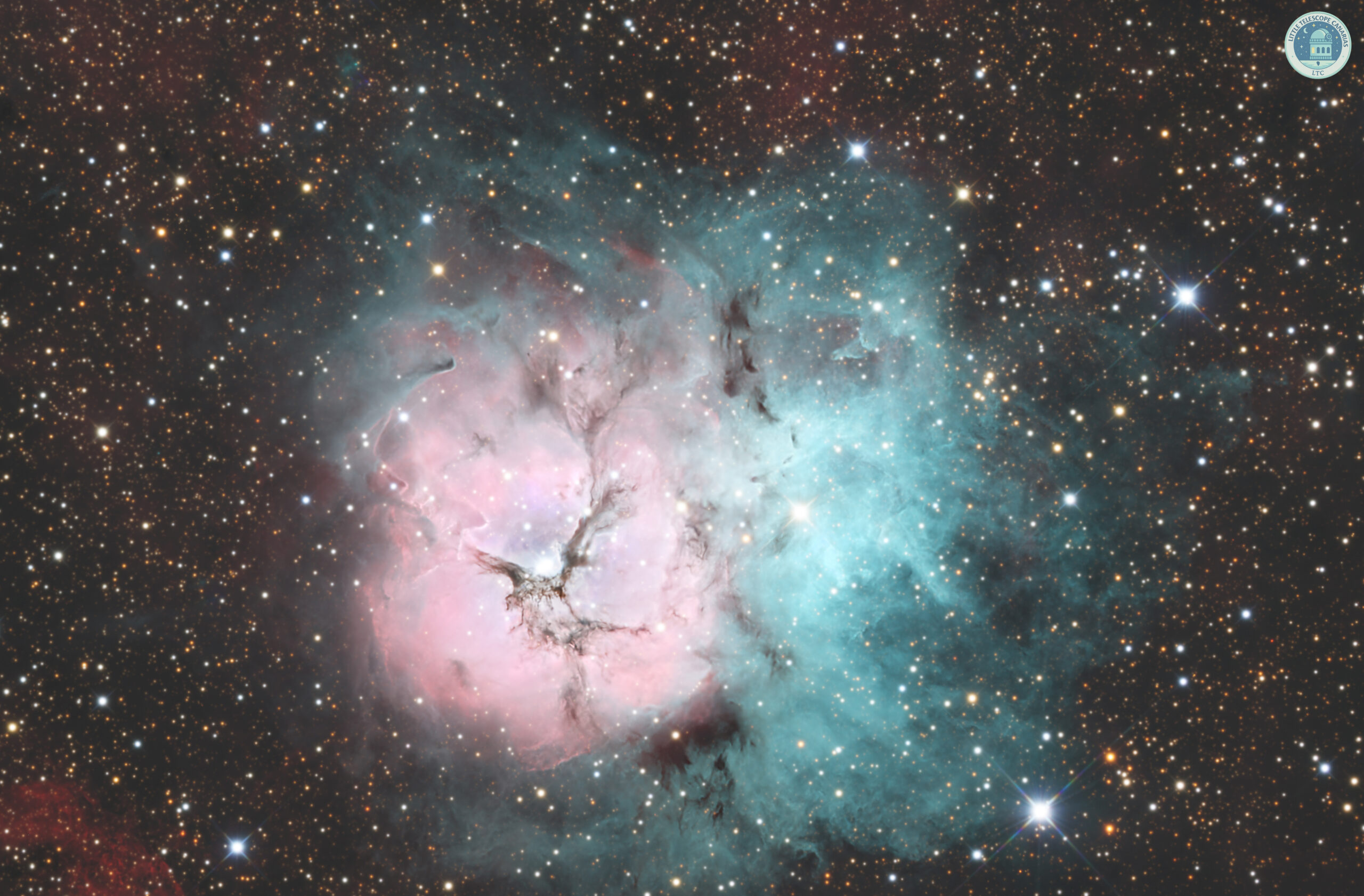
M20 – The Trifid Nebula: Science and Art in the Cosmos
The Trifid Nebula (M20, NGC 6514) is one of the most spectacular deep-sky objects, located in the constellation of Sagittarius, about 5,200 light-years from Earth. Its name, “Trifid,” comes from the three dark dust lanes that seem to divide it into distinct regions, creating a cosmic landscape of great beauty and complexity.
This object is a fascinating blend of different astronomical phenomena:
- An emission nebula, where ionized hydrogen gas glows brightly in reddish tones.
- A reflection nebula, which reflects the light of young, massive stars in a bluish glow.
- And a dark nebula, composed of interstellar dust clouds that block background light and give the nebula its distinctive “trifid” appearance.
A natural stellar laboratory
M20 is an active star-forming region. Inside, young massive stars emit ultraviolet radiation that ionizes the surrounding gas, generating the glow we see in the emission nebula. At the same time, the interaction between radiation, gas, and dust leads to the birth of new generations of stars still in formation.
Studying the Trifid Nebula helps astronomers understand how stars are born and evolve, as well as the dynamic processes that shape interstellar regions.
📸 Images from LilTecan
Thanks to the astronomical equipment of LilTecan, we have captured detailed images of the Trifid Nebula in different wavelengths.
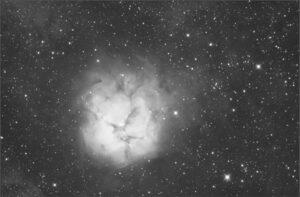
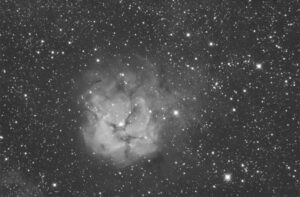
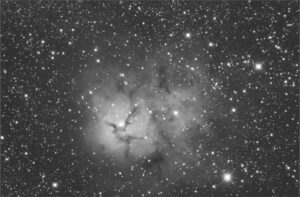
Each channel highlights different features:
- Hα (Hydrogen-alpha): reveals the glowing gas that dominates the region.
- SII (Ionized Sulfur): provides details about zones of strong stellar activity.
The combination of these images, using specific color palettes, offers both an artistic and scientific view of the object, showcasing not only its visual splendor but also the physical processes taking place within.