
Abell 43 – A Faint Gem in Ophiuchus
In the constellation of Ophiuchus, about 6,000 light-years from Earth, lies Abell 43, a planetary nebula of low surface brightness which, despite its faint glow, represents an object of great astrophysical interest.
This nebula is part of the George Abell catalog (1966), which compiled many of the faintest and most extended planetary nebulae in the sky. Unlike the brighter and more compact ones, Abell 43 requires dark skies and advanced astrophotography techniques to reveal its true structure.
The Silent End of a Star
Abell 43 is the result of the final stages of a Sun-like star, which, upon exhausting its nuclear fuel, expelled its outer layers into space. At its center, we find a very hot stellar remnant that faintly illuminates the surrounding gas.
What makes this object fascinating is its low density and diffuse structure: instead of a compact nebula, it displays an extended, ghostly halo of gas that can only be detected with long exposures and narrowband imaging.
📸 Images from LilTecan
Thanks to the astronomical equipment of LilTecan, we have captured Abell 43 using specialized filters in LRGB and OIII, highlighting the different gases that compose this planetary nebula.
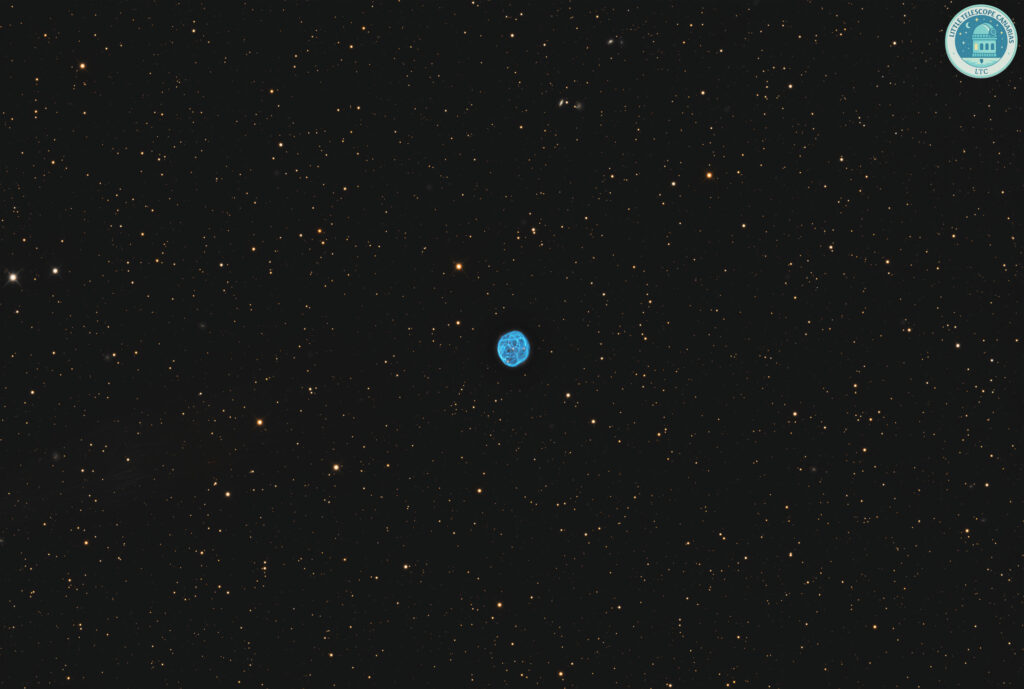
Each filter provides unique information:
- LRGB: reveals background galaxies and the color of stars.
- OIII (Doubly ionized Oxygen): provides the bluish-green glow characteristic of planetary nebulae.
When combined, these images unveil the tenuous and delicate structure of Abell 43, one of the faintest and most elusive objects in the Abell catalog.
✨ A Window into Stellar Evolution
Studying objects like Abell 43 helps astronomers better understand the final phases of stellar evolution in intermediate-mass stars. Its low density and faint luminosity provide insights into how these dying stars interact with the interstellar medium and disperse their outer layers.
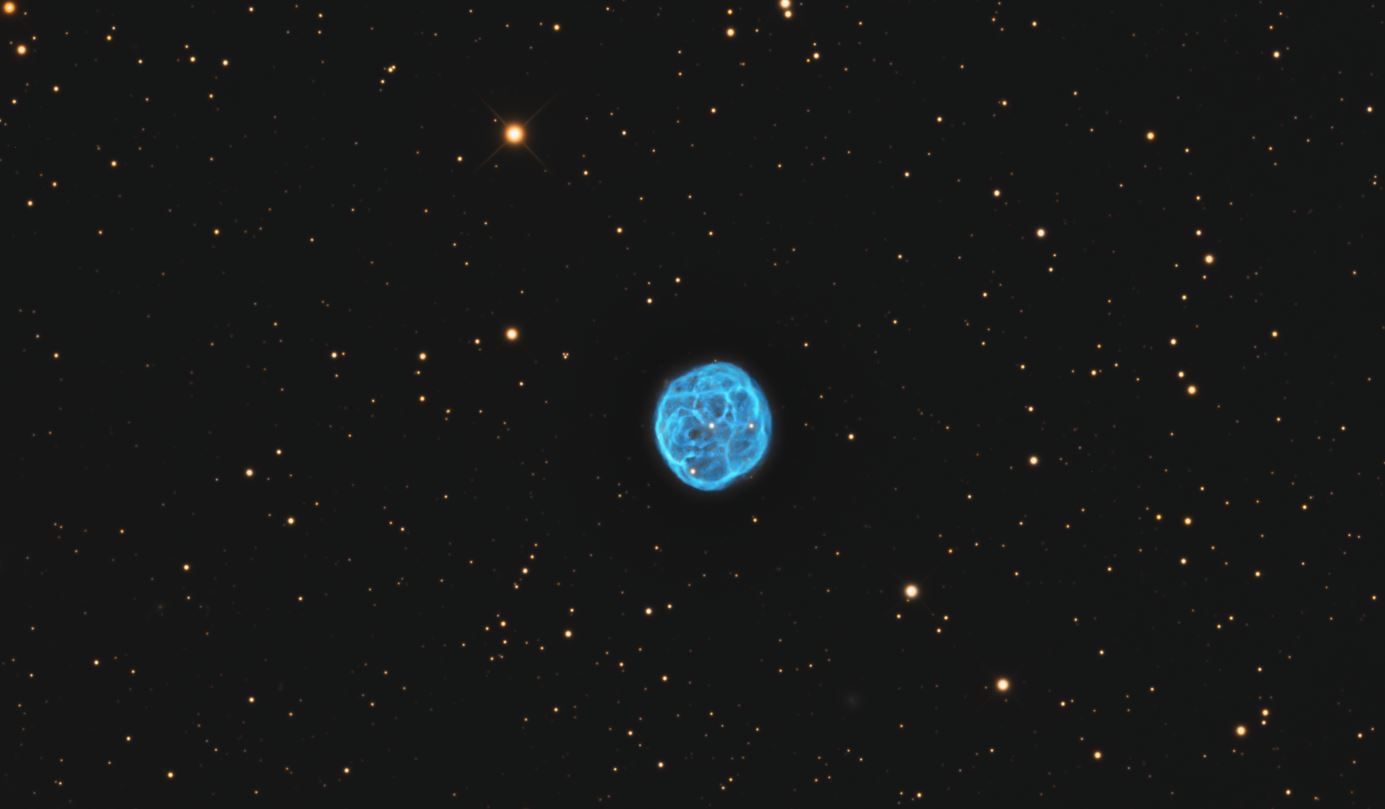
Abell 43 is a perfect example of how even the faintest objects can reveal extraordinary beauty and scientific value.