
M27 – The Dumbbell Nebula
In the constellation of Vulpecula, about 1,360 light-years from Earth, lies one of the most impressive and brightest planetary nebulae of the deep sky: M27, also known as the Dumbbell Nebula. Discovered by Charles Messier in 1764, it is an iconic object in astronomical observation and one of the best examples of how a Sun-like star ends its life.
The Legacy of a Dying Star
M27 was formed when a star similar to the Sun exhausted its nuclear fuel and expelled its outer layers into space. The result was a shell of ionized gas, glowing under the ultraviolet radiation emitted by the white dwarf left behind at its core.
With its characteristic bipolar shape, reminiscent of a dumbbell, M27 reveals a complex interaction of expanding gases that allows astronomers to study the process of stellar evolution and how stars enrich the interstellar medium with heavier elements.
📸 Images from LilTecan
The team at LilTecan has photographed the Dumbbell Nebula using narrowband filters (Hα, SII, and OIII), highlighting the richness of its internal structures and the different gas emissions:
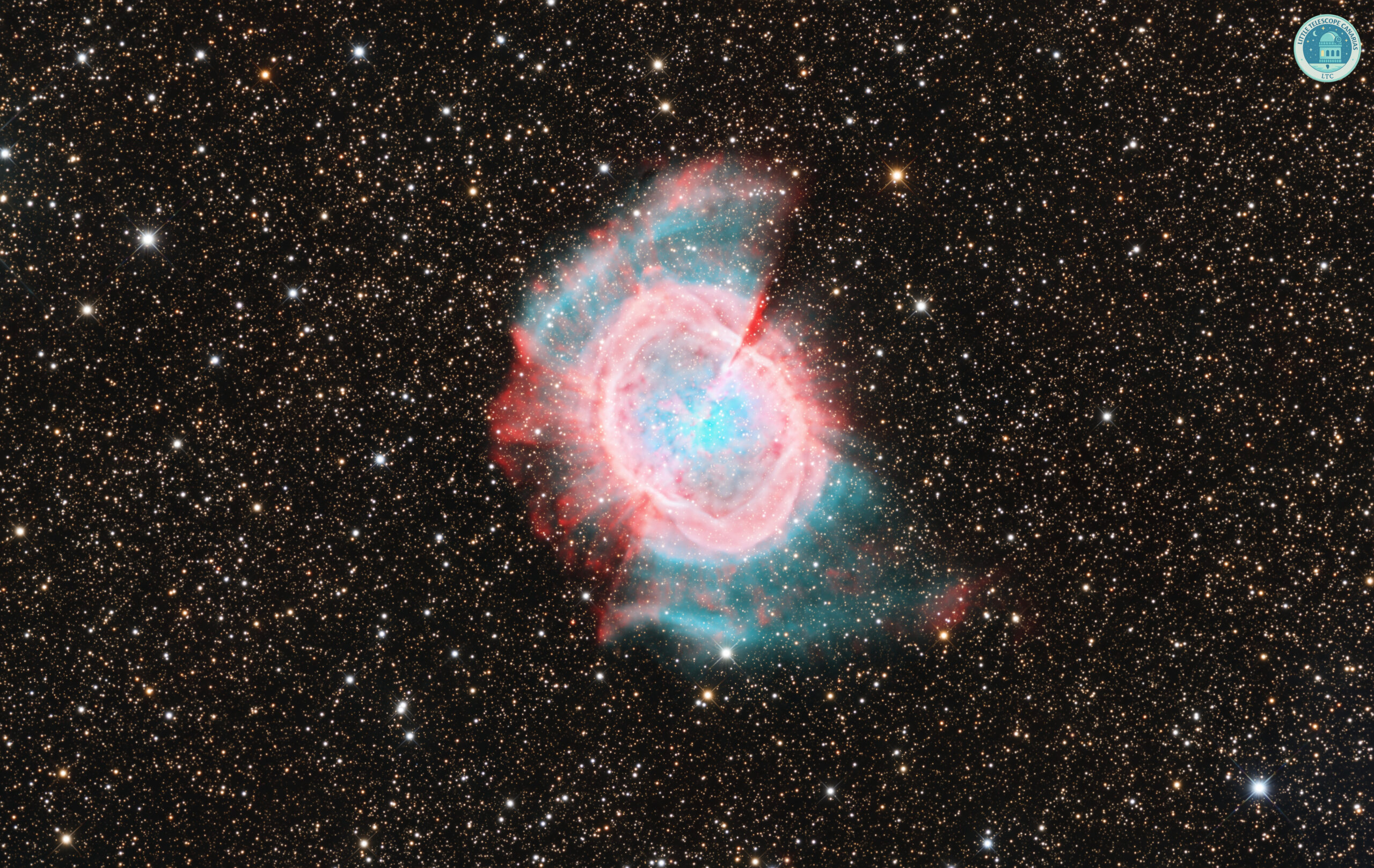
- Hα (Hydrogen-alpha): shows the distribution of the most abundant gas.
- SII (Ionized Sulfur): highlights regions of greater density and contrast.
- OIII (Doubly Ionized Oxygen): produces the characteristic bluish-green glow that dominates M27.
By combining these wavelengths, we obtain a detailed and three-dimensional view of the nebula, allowing us to appreciate its magnificence from multiple perspectives.
✨ Science and Cosmic Beauty
The study of M27 offers a direct window into the final fate of stars like the Sun. Through this object, we can understand how stellar processes return enriched matter to space, contributing to the formation of new stars and planets.
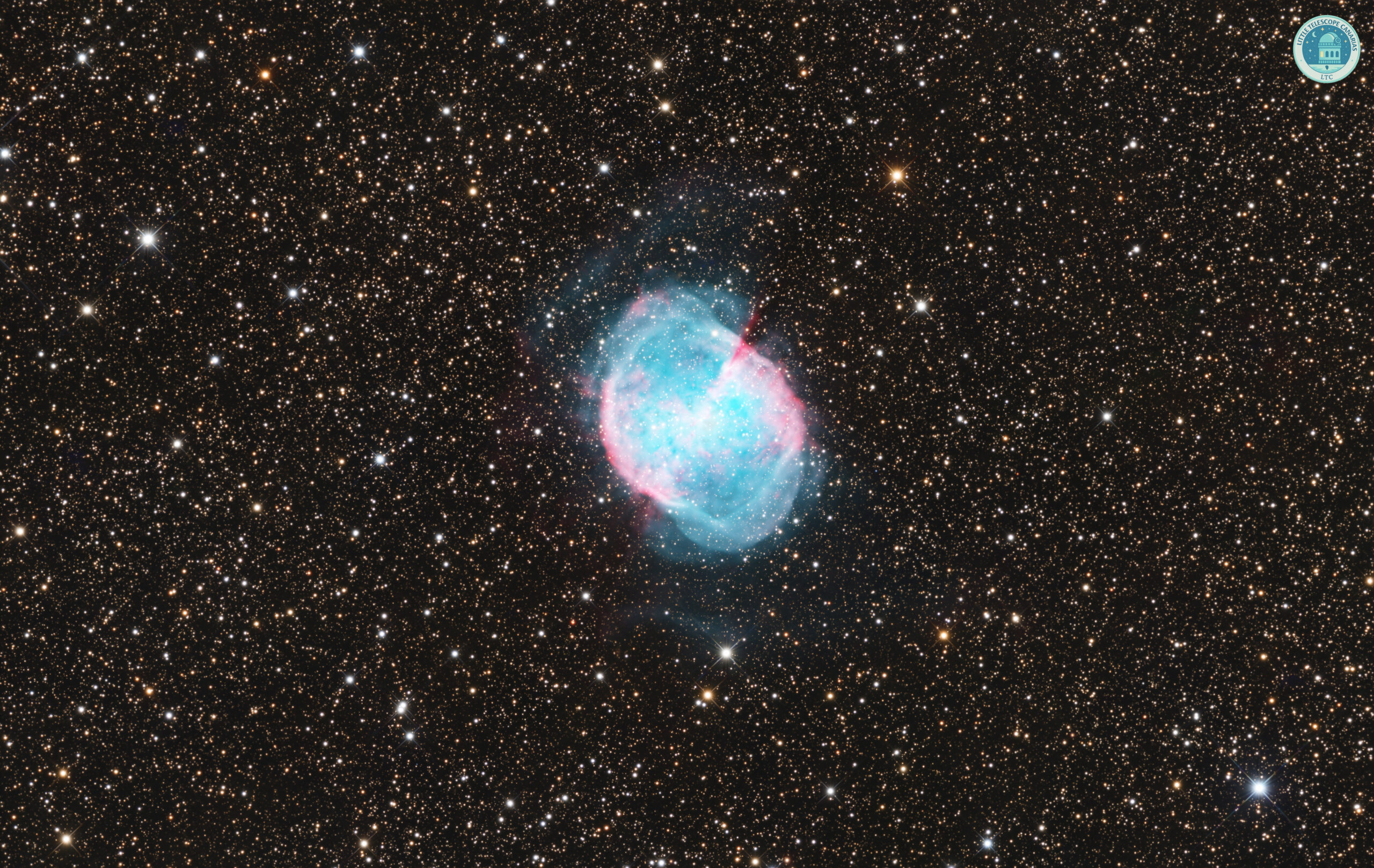
But beyond its scientific importance, the Dumbbell Nebula is also a true visual spectacle: a piece of cosmic art where the death of a star becomes a legacy of beauty and knowledge.