
M86 – A Giant Elliptical Galaxy in the Virgo Cluster
M86 is a giant elliptical galaxy located in the constellation of Virgo, about 52 million light-years from Earth. It was discovered by Charles Messier in 1781 and is part of the famous Virgo Cluster, one of the largest galaxy concentrations in the nearby universe.
M86 stands out for its enormous size, bright core, and extraordinary relative velocity within the cluster, making it one of the most dynamic and studied objects in this region of the sky.
💥 A galaxy moving at tremendous speed
M86 is known for traveling through the intracluster medium of the Virgo Cluster at extremely high velocities. This motion produces interaction phenomena with the hot gas filling the cluster, generating structures visible in X-rays and complex gas streams.
Observations indicate that the galaxy is losing part of its gas through a process known as ram pressure stripping, where the intracluster medium acts to slow down and strip interstellar material from the galaxy.
📸 Images from LilTecan
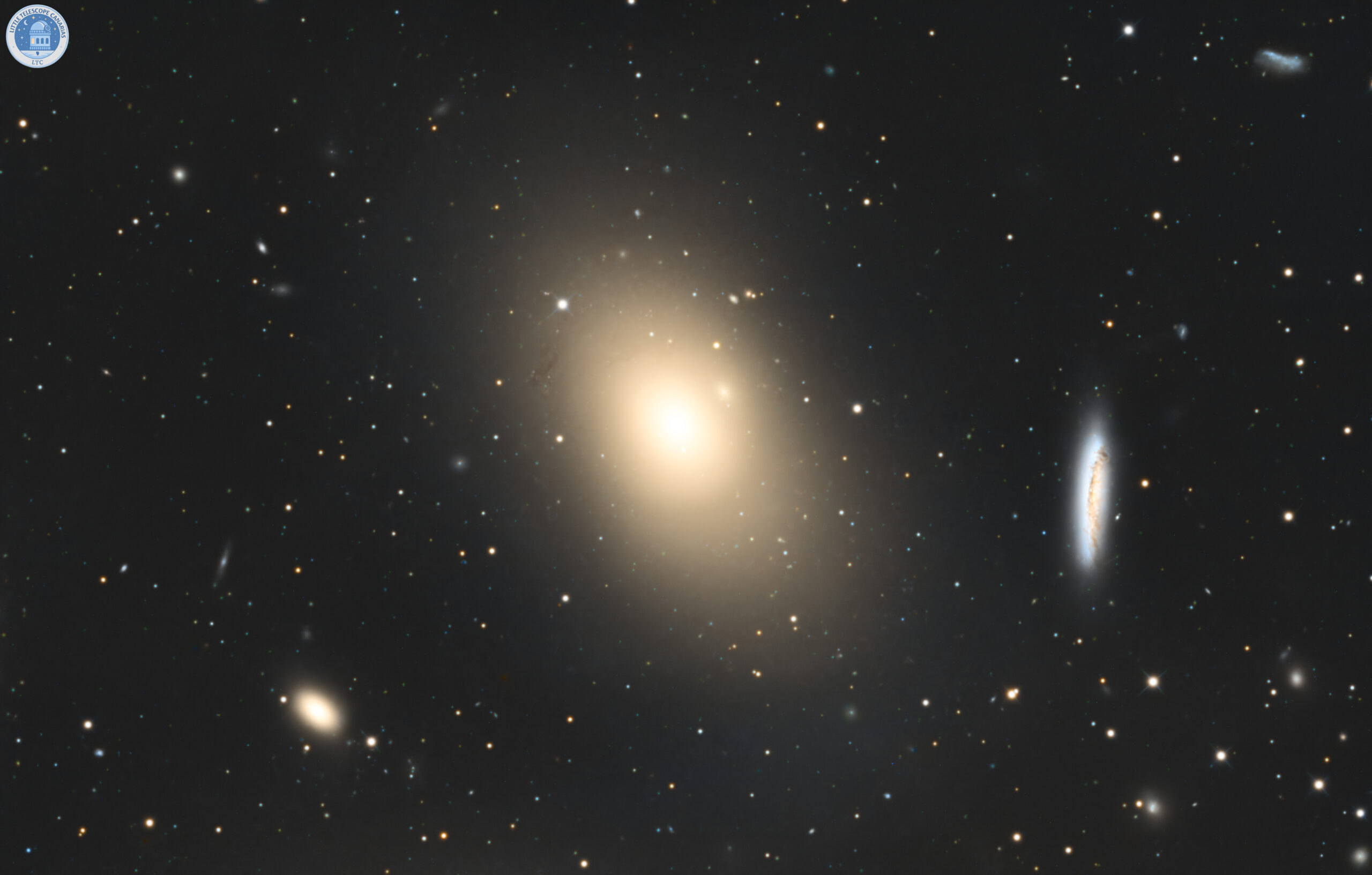
The LilTecan team has captured M86, highlighting its bright elliptical core, the diffuse halo surrounding it, and the rich galactic field of the Virgo Cluster environment.
🌟 Structure and main characteristics
Observational studies have revealed numerous important aspects of this galaxy:
- It is a giant elliptical galaxy classified as type E3/S0.
- It is part of the core region of the Virgo Cluster.
- It exhibits an unusually high radial velocity compared to nearby galaxies.
- Extensive gas structures observable in X-rays have been detected.
- It is undergoing ram pressure stripping, losing interstellar gas due to the intracluster medium.
- It hosts a large population of old stars and globular clusters.
M86 is one of the most fascinating objects in the Virgo Cluster and an excellent example of how the galactic environment can profoundly influence the evolution of a galaxy.
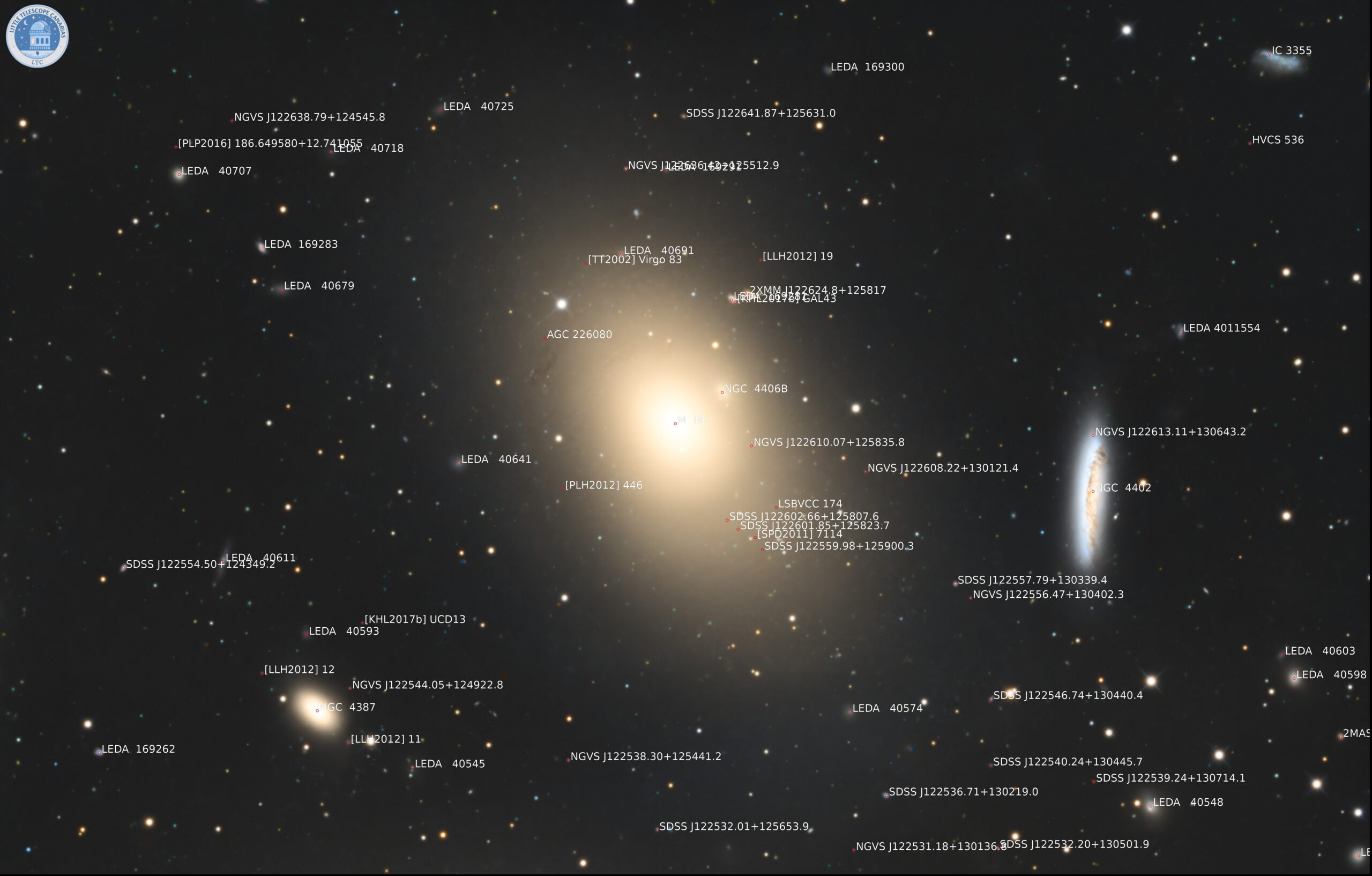
Observing this galaxy today is like watching a gigantic system moving through an ocean of hot plasma, where gravity and interactions between galaxies continue to slowly shape the large-scale structures of the universe.