
M97 – The Owl Nebula
M97 known as the Owl Nebula, is a planetary nebula located in the constellation of Ursa Major, about 2,000–2,500 light-years from Earth. It was discovered by Pierre Méchain in 1781 and later included in the catalog of Charles Messier.
Its name comes from its distinctive appearance, where two darker regions resemble the “eyes” of an owl.
💥 The end of a Sun-like star
M97 is the result of the evolution of a star with a mass similar to the Sun, which, after exhausting its nuclear fuel, expelled its outer layers to form an expanding gaseous shell.
At its center lies a hot white dwarf, whose ultraviolet radiation ionizes the surrounding gas. This process produces its diffuse glow, dominated by ionized oxygen emissions that give it a greenish hue.
📸 Images from LilTecan
The LilTecan team has captured the Owl Nebula, highlighting its circular structure and the inner low-brightness regions that create its characteristic “gaze.”
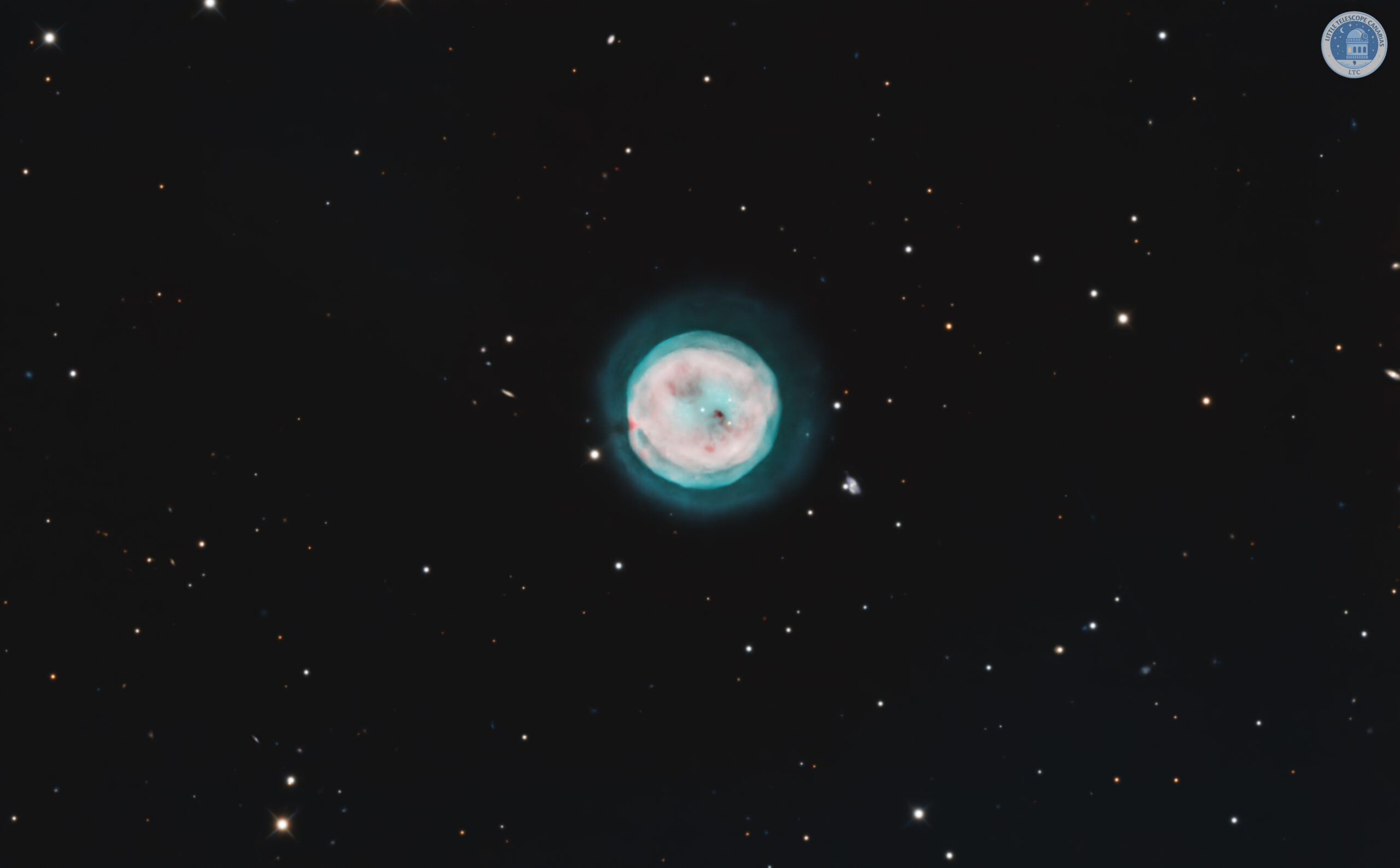
🌟 A complex and enigmatic structure
Modern studies have revealed several aspects of its morphology:
- It shows an approximately spherical structure, with multiple layers of gas.
- Its “eyes” correspond to regions of lower density, possibly linked to outflows of material.
- Its angular size is about 3 arcminutes, corresponding to roughly 2 light-years.
- The gas temperature is around 10,000 K.
- Its spectrum is dominated by emission lines such as [O III], responsible for its characteristic color.
- Its structure suggests a non-uniform mass ejection, influenced by internal dynamical processes.
M97 —the Owl Nebula— is one of the most iconic planetary nebulae in the sky. Its peculiar shape and complex structure make it a key object for understanding the final stages of stellar evolution.
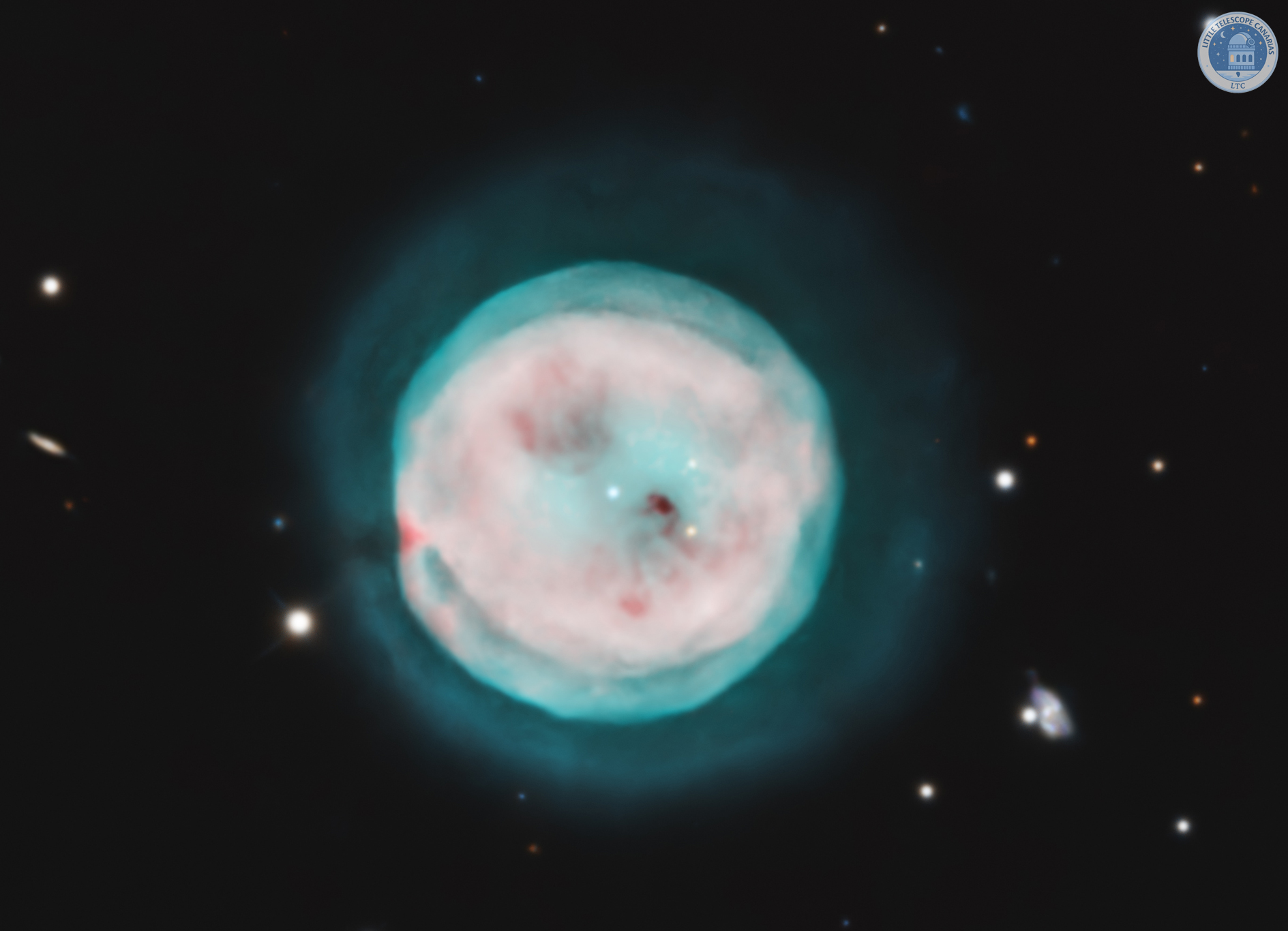
Observing it today is like witnessing the final fate of stars like our Sun, in a phase where matter expands and slowly returns to the interstellar medium, fueling future cycles of star formation.