
NGC 6765 – A Bipolar Planetary Nebula in the Constellation Lyra
NGC 6765 is a small and peculiar planetary nebula located in the constellation of Lyra, discovered by Albert Marth on June 28, 1864. With an apparent magnitude of about 12.9 and an angular size of only 38 arcseconds, it is a faint object that requires moderate to large telescopes to reveal its most interesting details.
Although it initially appears as a compact and irregular nebula, modern observations have shown a much more complex structure than previously thought.
💥 The Legacy of a Dying Star
Like all planetary nebulae, NGC 6765 was formed when a Sun-like star expelled its outer layers during the final stages of its evolution. Ultraviolet radiation from the remaining stellar core ionizes the surrounding gas, causing it to glow at various wavelengths.
One of the most interesting aspects of NGC 6765 is that its central star belongs to the PG 1159 class, a rare type of extremely hot, hydrogen-deficient star representing an advanced stage in the evolution of intermediate-mass stars.
📸 Images from LilTecan
The LilTecan team has captured NGC 6765, revealing its complex bipolar structure, bright inner condensations, and faint outer extensions surrounding the nebula.
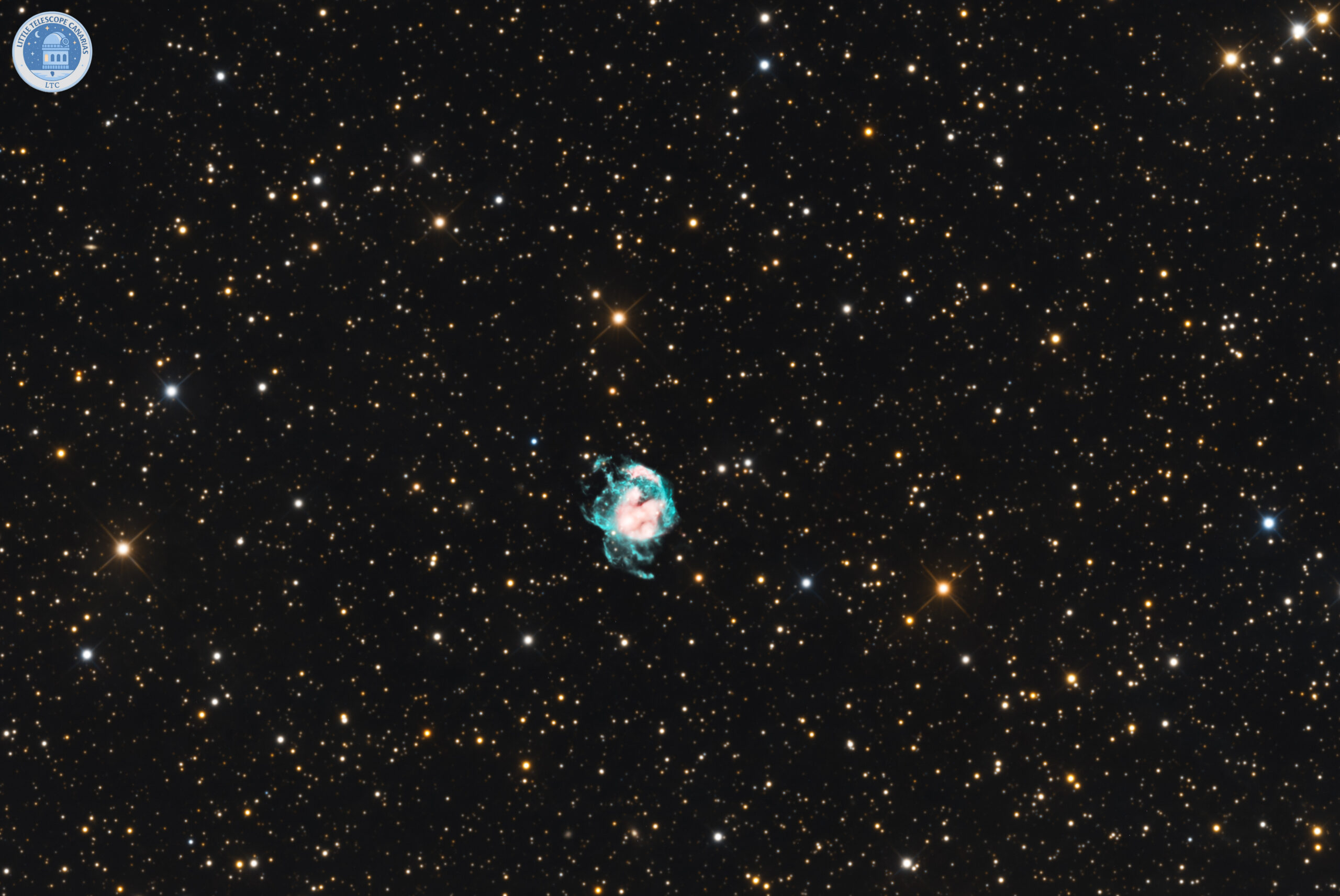
🌟 Structure and Main Characteristics
Imaging and spectroscopic studies have identified several remarkable features:
- It is currently classified as a bipolar planetary nebula, although its morphology remained difficult to interpret for many years.
- It exhibits a bright equatorial ring-like structure viewed nearly edge-on.
- It possesses faint bipolar lobes extending on both sides of the central region.
- Bright condensations and collimated structures have been observed, associated with fast outflows of material expelled by the central star.
- Various images show evidence of polar jets and an irregular outer envelope.
- The nebula has a high excitation level and does not fit easily into the classical morphological categories of planetary nebulae.
NGC 6765 is an excellent example of how planetary nebulae can develop complex shapes through collimated stellar winds and dynamic processes that go far beyond simple spherical expansion.
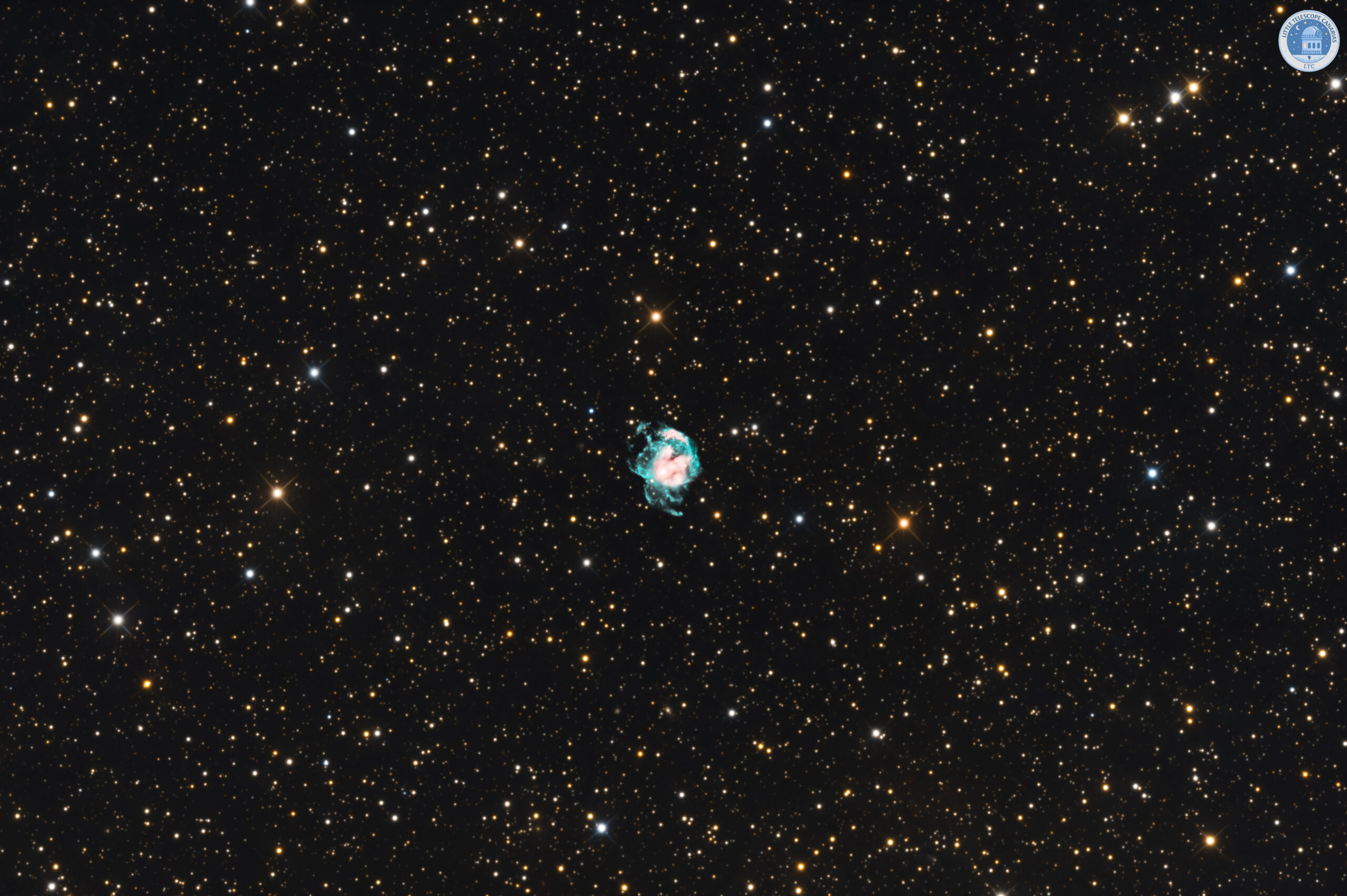
Observing this small nebula today is like witnessing a brief stage in the life of a star. Its delicate lobes, jets, and irregular structures remind us that stellar death can be a surprisingly dynamic and intricate process.