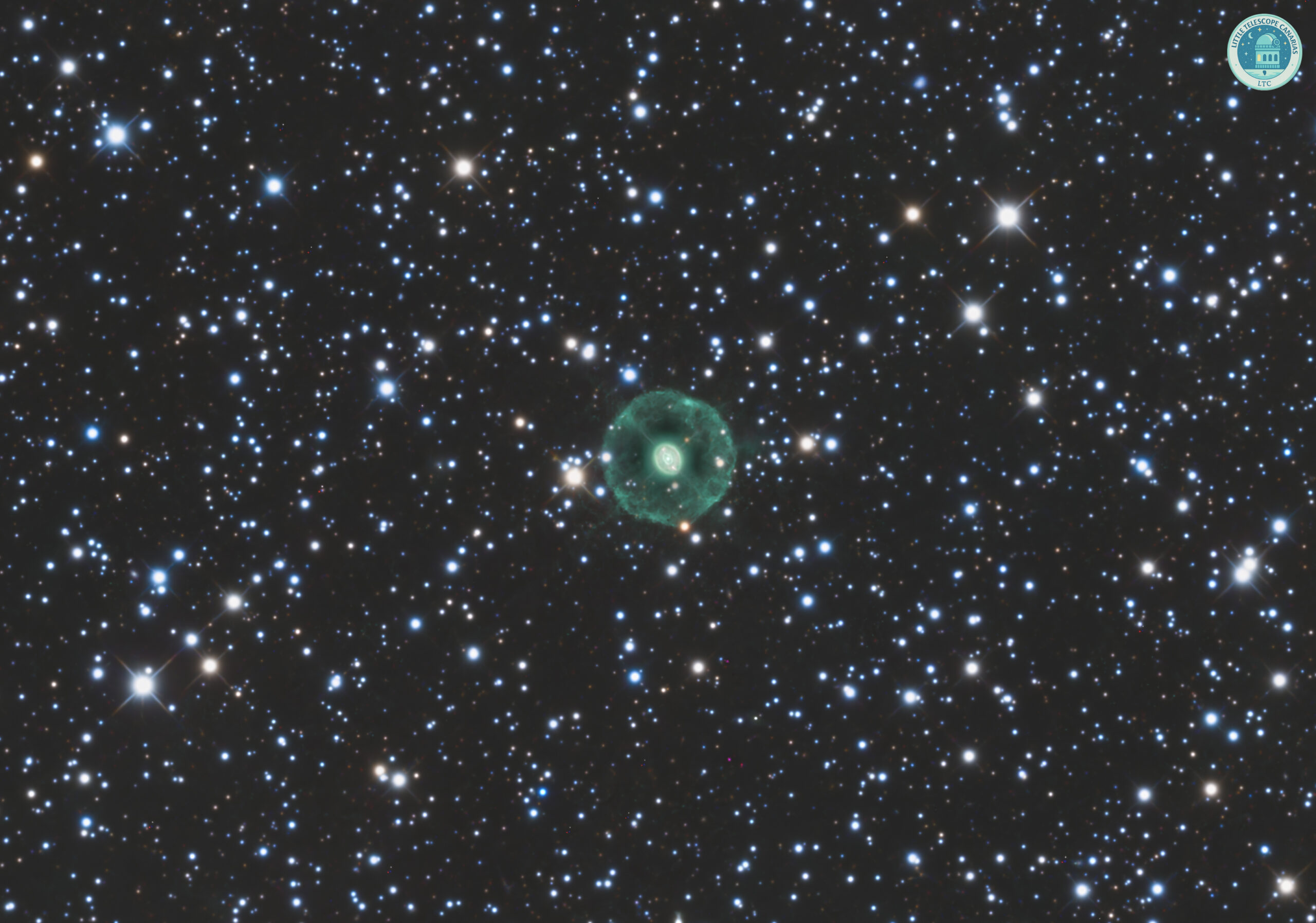
NGC 6826 – The “Blinking Eye” Nebula
Among the most fascinating deep-sky objects is NGC 6826, also known as the Blinking Planetary Nebula, located in the constellation of Cygnus (The Swan) about 2,000 light-years from Earth.
This object owes its curious nickname to a visual effect: when observed through a telescope, the bright central star dominates the view, making the surrounding nebula appear and disappear—almost as if it were “blinking.”
The End of a Star
NGC 6826 is a planetary nebula, formed when a Sun-like star exhausted its nuclear fuel and expelled its outer layers into space. What remains at the center is a very hot white dwarf, emitting ultraviolet radiation that ionizes the surrounding gas and makes it glow in bluish-green tones.
What makes this nebula unique is its internal structure: a very bright central region surrounded by a diffuse gaseous envelope, with filaments and patches of stronger emission that reveal the complexity of the processes involved in a star’s final stages.
📸 Images from LilTecan
Thanks to the astronomical equipment at LilTecan, we have captured NGC 6826 in different wavelengths, showcasing both its bright core and the faint external layers surrounding the central star.
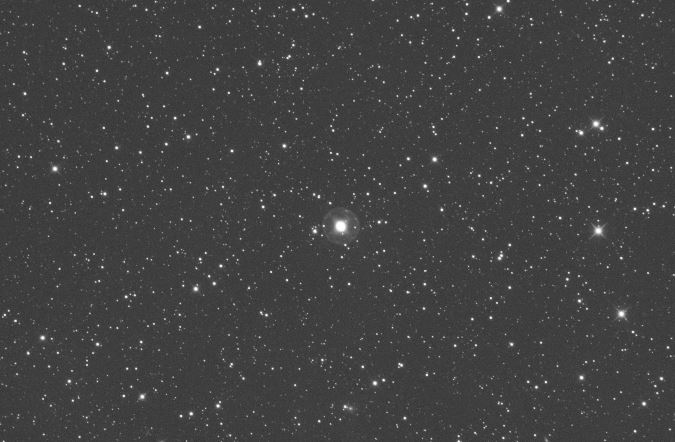
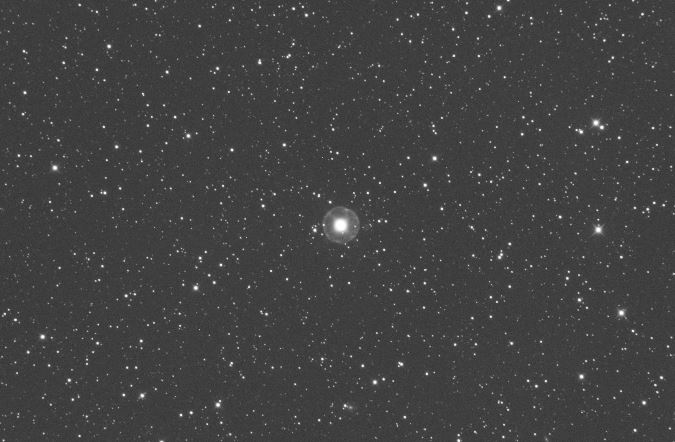
Each filter reveals unique aspects of the nebula:
- Hα (Hydrogen-alpha): shows the most extended regions of ionized gas.
- SII (Ionized Sulfur): highlights the densest and most dynamic zones.
- OIII (Doubly ionized Oxygen): produces the characteristic bluish-green glow that makes this nebula so distinctive.
Combining these images provides a detailed view of the inner and outer structures of NGC 6826.
✨ A Cosmic Laboratory
Beyond its beauty, NGC 6826 serves as a natural laboratory for studying the late phases of stellar evolution. The analysis of its gaseous shells and central star allows astronomers to better understand how intermediate-mass stars enrich the interstellar medium with the chemical elements that will eventually form new generations of stars and planetary systems.