
NGC 6894 – A Faint Planetary Nebula in Cygnus
NGC 6894 is a planetary nebula located in the constellation of Cygnus, at an approximate distance of 5,000 light-years from Earth. It was discovered by William Herschel in 1784 and is characterized by its low surface brightness, making it a subtle and challenging object to observe.
Its faint and relatively uniform appearance places it among the more evolved planetary nebulae.
💥 The final stage of a star
NGC 6894 represents an advanced stage in the evolution of a Sun-like star. After expelling its outer layers, the material has expanded and dispersed, forming an increasingly diffuse gaseous shell.
At its center remains a hot white dwarf, whose ultraviolet radiation ionizes the surrounding gas, though less intensely than in younger nebulae due to the dispersion of the material.
📸 Images from LilTecan
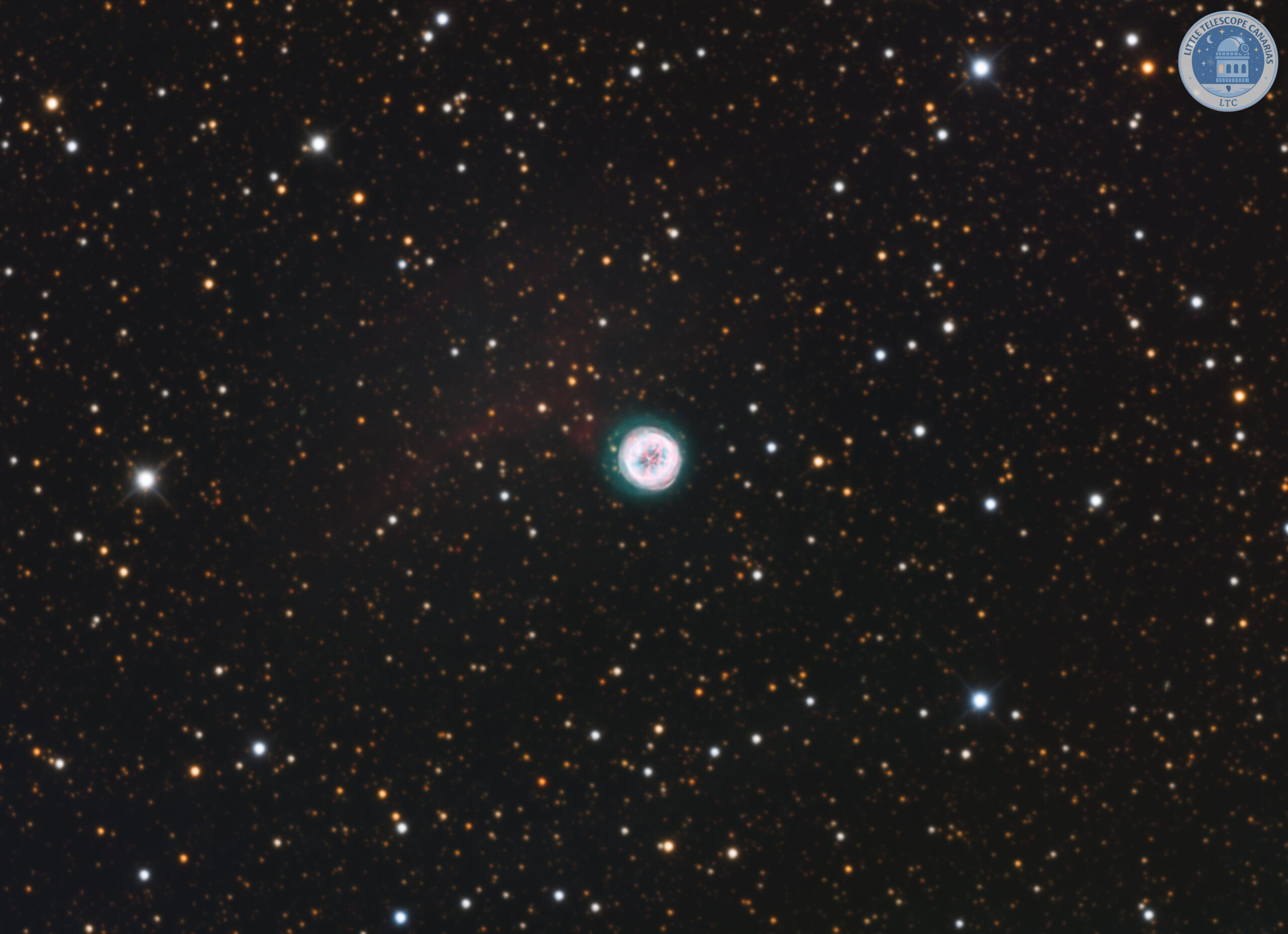
The LilTecan team has captured this nebula using long exposures, revealing its delicate structure and subtle brightness variations within its envelope.
🌟 A nebula in the process of dissipation
Observational studies have identified several key characteristics:
- It has an approximately circular shape, with diffuse edges.
- Its angular size is about 40 arcseconds, indicating a relatively compact but faint structure.
- It exhibits low surface brightness, typical of evolved nebulae.
- The gas temperature is around 10,000 K.
- Its spectrum is dominated by emission lines such as [O III] and Hα, though weaker in intensity.
- It is in a phase of expansion and dispersion, gradually merging into the interstellar medium.
NGC 6894 is a clear example of the final stages of planetary nebulae. Its faint appearance reflects a transition process toward its eventual disappearance as a distinct object.
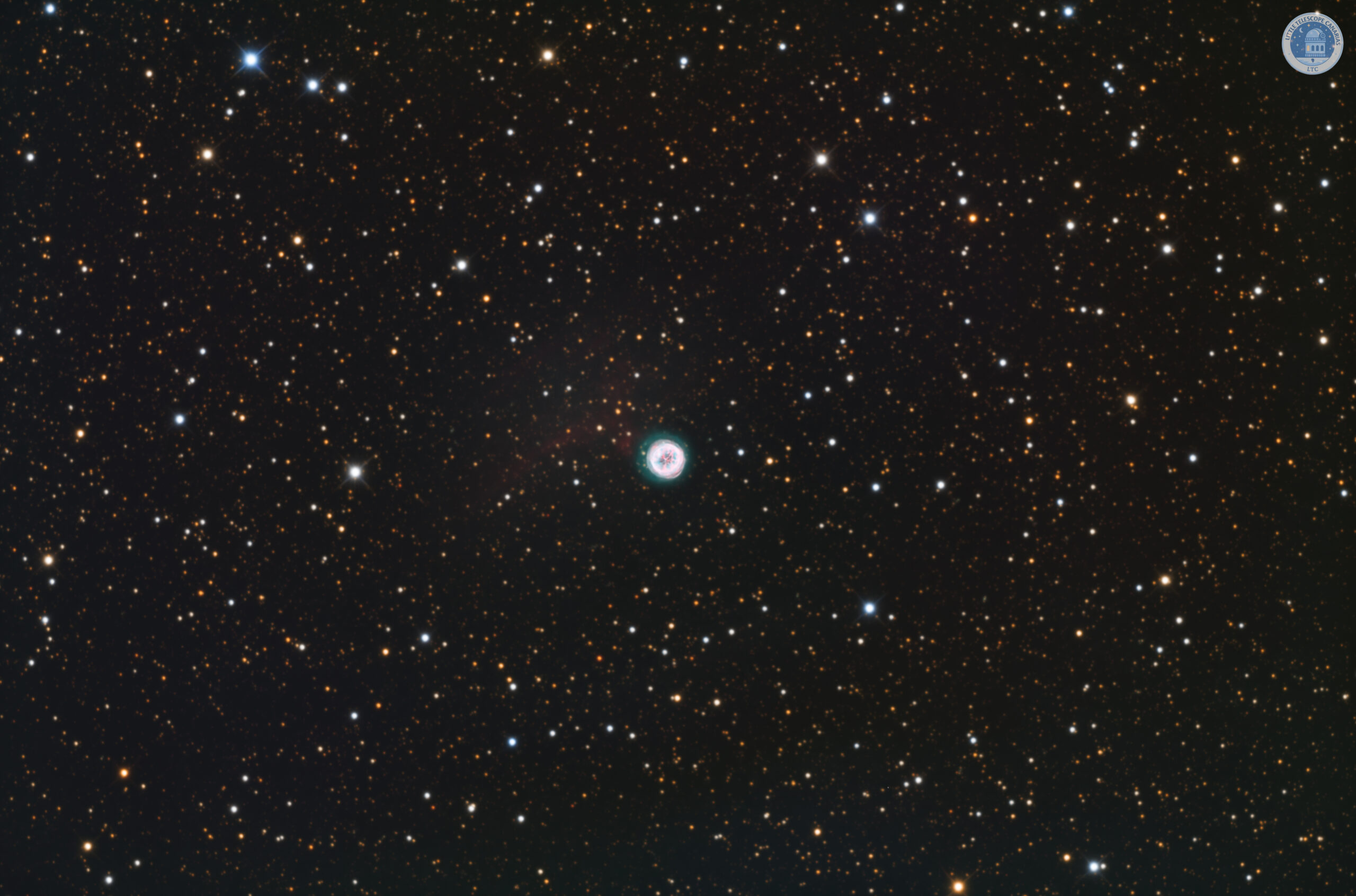
Observing it today is like witnessing an advanced phase of the stellar cycle, where the remnants of a star slowly fade away, enriching the interstellar medium and contributing to the continuous cycle of matter in the universe