
NGC 772 – An Asymmetric Spiral in Aries
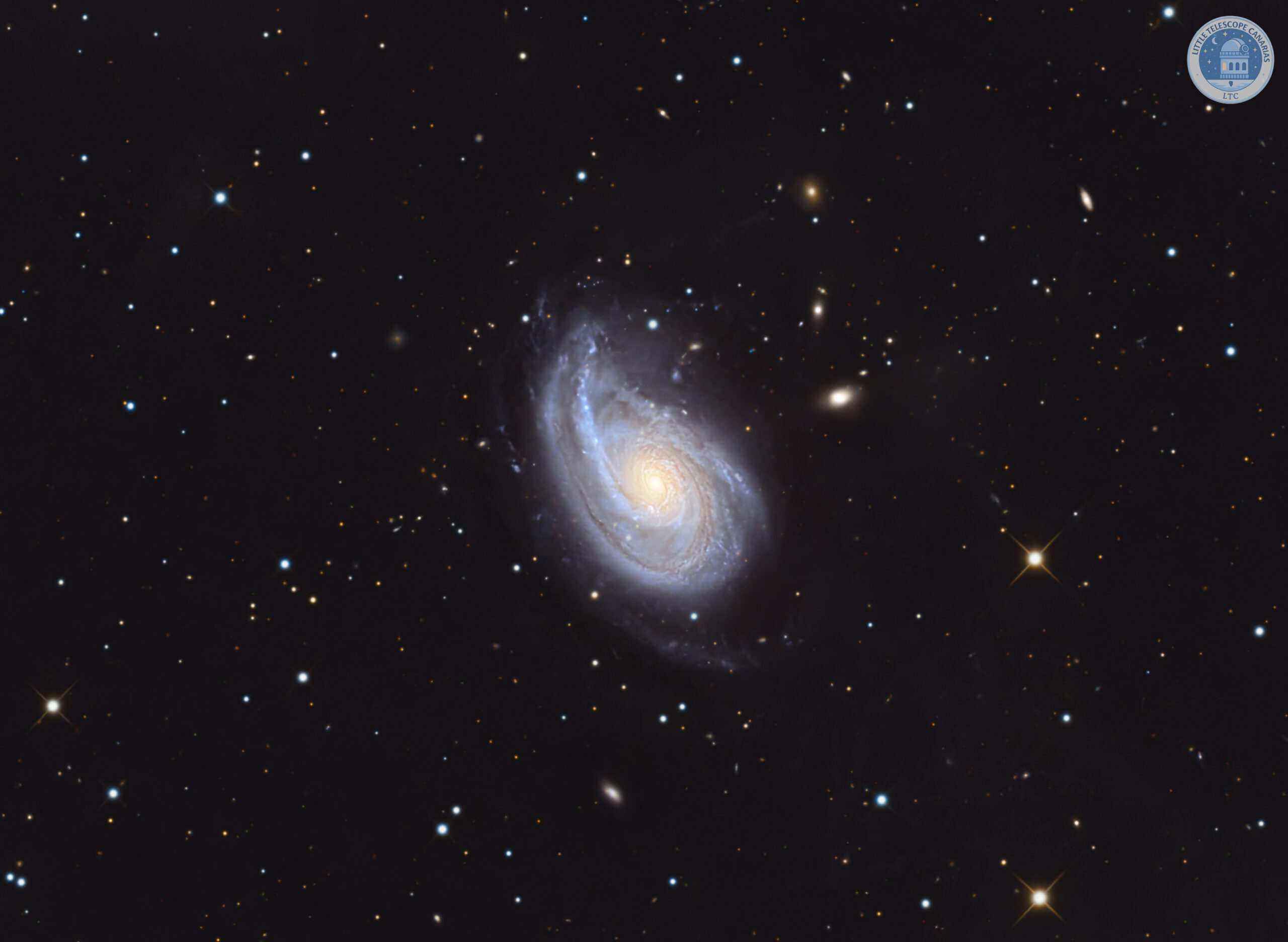
The NGC 772 is a spiral galaxy located in the constellation of Aries, about 130 million light-years from Earth. It was discovered by William Herschel in 1785 and stands out for its pronounced asymmetry, with one spiral arm much more developed than the others.
This unusual morphology makes it an especially interesting object for studying galactic interactions.
💥 The imprint of gravitational interaction
The uneven shape of NGC 772 is likely due to its interaction with its satellite galaxy, NGC 770. The gravitational pull between them has distorted the galactic disk, creating a more prominent spiral arm.
Such interactions can redistribute gas and dust, promoting the emergence of new star-forming regions.
📸 Images from LilTecan
The LilTecan team has captured NGC 772, highlighting its bright nucleus and dominant spiral arm, along with subtle structures that reveal the gravitational influence of its companion.
🌟 Structure and galactic dynamics
Modern studies have identified several key features:
- It exhibits an asymmetric spiral structure, with a clearly dominant arm.
- Its nucleus is bright and well-defined, surrounded by an extended disk.
- It contains abundant gas and dust, especially within the main arm.
- Active star-forming regions are visible, associated with gravitational perturbations.
- The interaction with NGC 770 influences its dynamical evolution.
NGC 772 is a clear example of how galactic interactions can shape a galaxy’s structure, producing unique forms and complex dynamical processes.
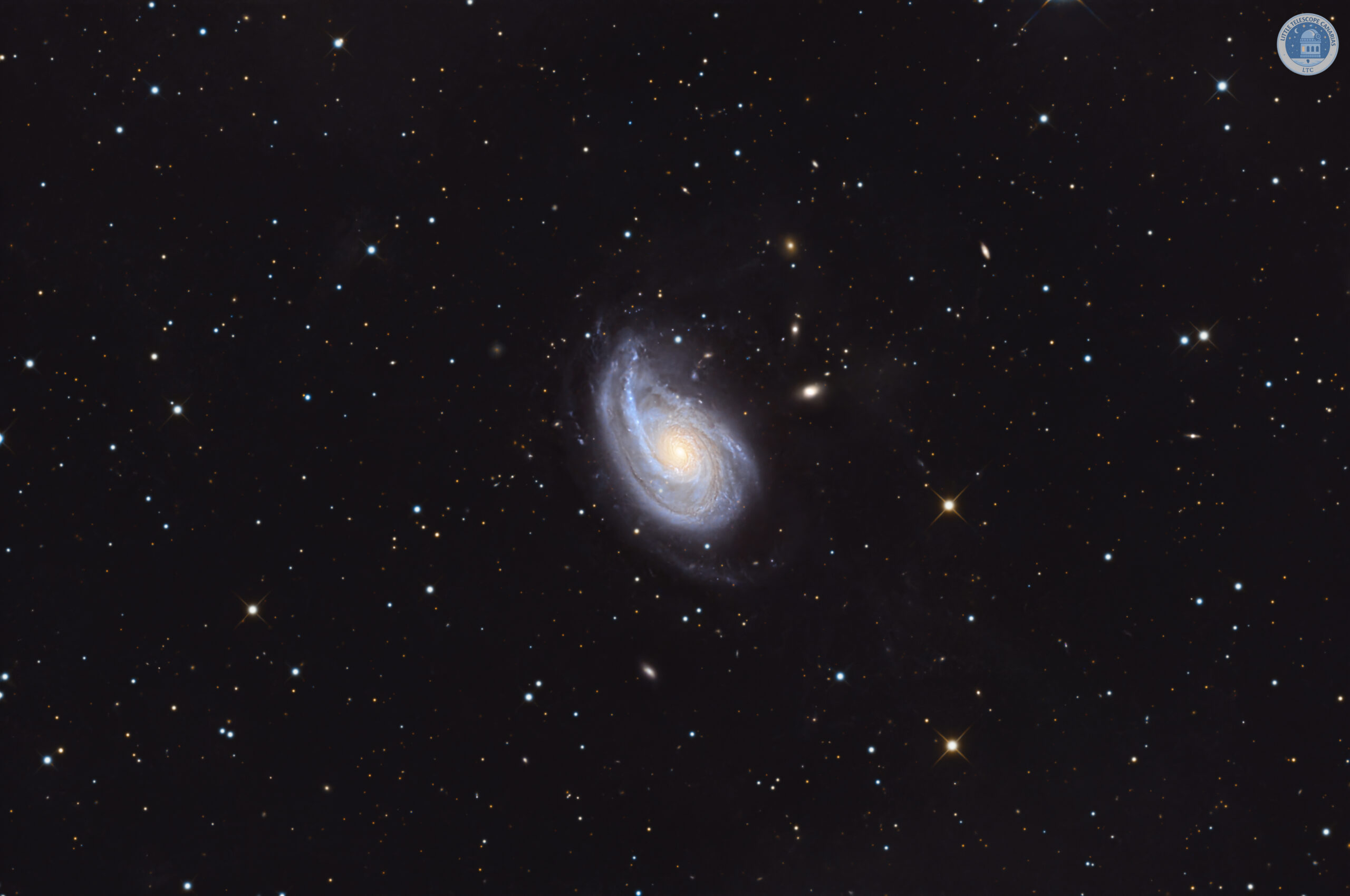
Observing it today is like witnessing a galaxy in transformation, where gravity acts as a cosmic sculptor, slowly reshaping its form and triggering new cycles of star formation.