
NGC 40 – The Bow-Tie Nebula
NGC 40, known as the Bow-Tie Nebula, is a planetary nebula located in the constellation of Cepheus, about 3,500–4,000 light-years from Earth. It was discovered by William Herschel in 1788 and stands out for its slightly elliptical shape and smooth, diffuse appearance.
Unlike other planetary nebulae with high contrast, NGC 40 appears more uniform, although it hides very interesting physics within.
💥 The final stage of a star
NGC 40 is the result of a star expelling its outer layers during the final phase of its evolution. This material forms an expanding shell illuminated by the central star.
At its core lies a Wolf–Rayet-type star ([WC]), extremely hot and producing strong stellar winds. These winds interact with previously ejected material, creating complex internal structures and heating the surrounding gas.
📸 Images from LilTecan
The LilTecan team has captured NGC 40, highlighting its gaseous envelope, subtle brightness variations, and the internal structure shaped by the stellar winds of its central star.
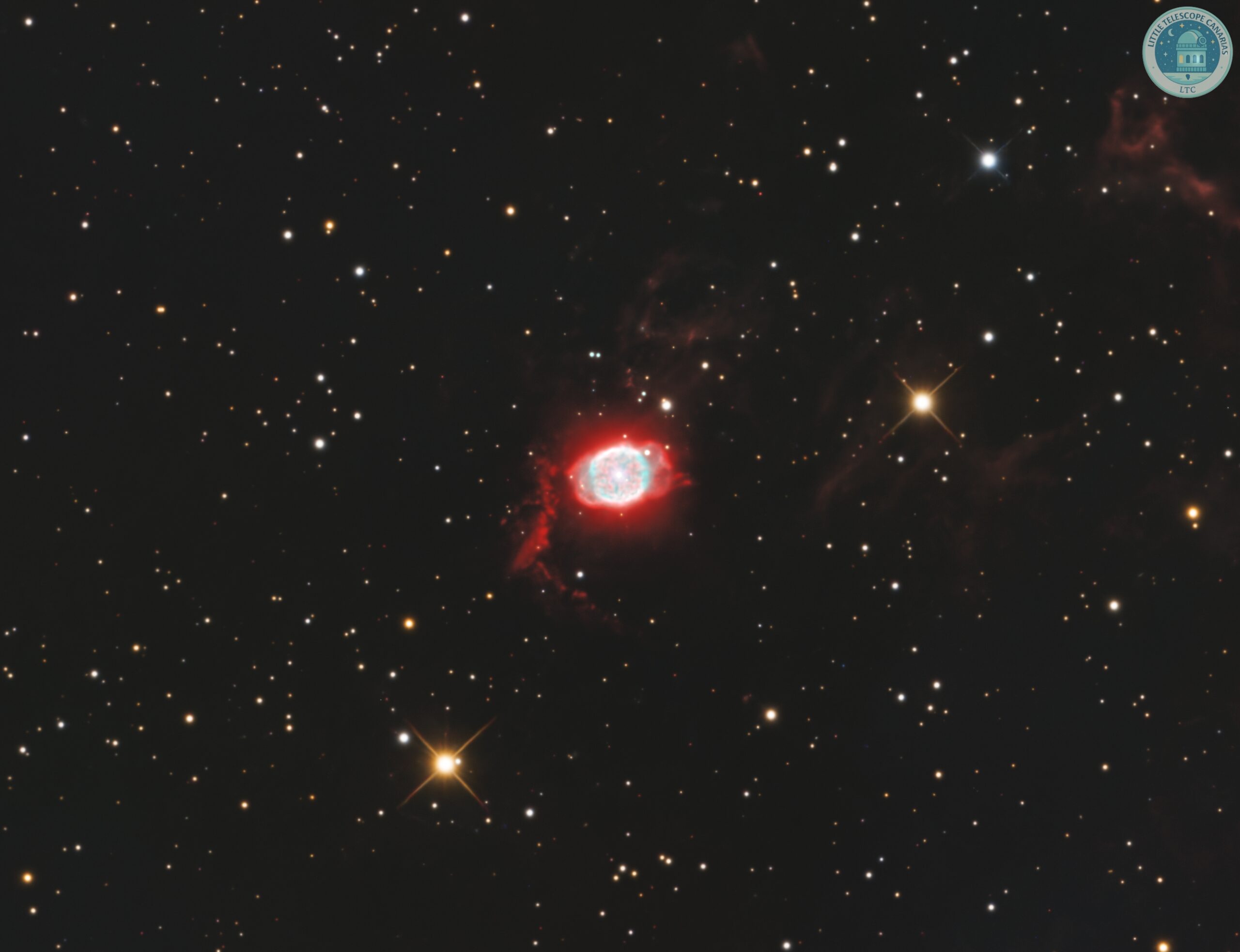
🌟 A nebula shaped by stellar winds
Modern studies have revealed key characteristics of this object:
- It shows an elliptical structure with a relatively uniform envelope.
- Its angular size is about 40 arcseconds, corresponding to roughly 1 light-year.
- The central star is of type [WC8], with strong stellar winds.
- These winds create a hot inner cavity, observable in X-rays.
- Its spectrum shows emission lines of carbon, helium, and ionized oxygen.
- The interaction between stellar wind and envelope drives a complex dynamical evolution.
NGC 40 —the Bow-Tie Nebula— is a remarkable example of how stellar winds can shape the structure of a planetary nebula. Its smooth appearance contrasts with the intense physical activity occurring within.
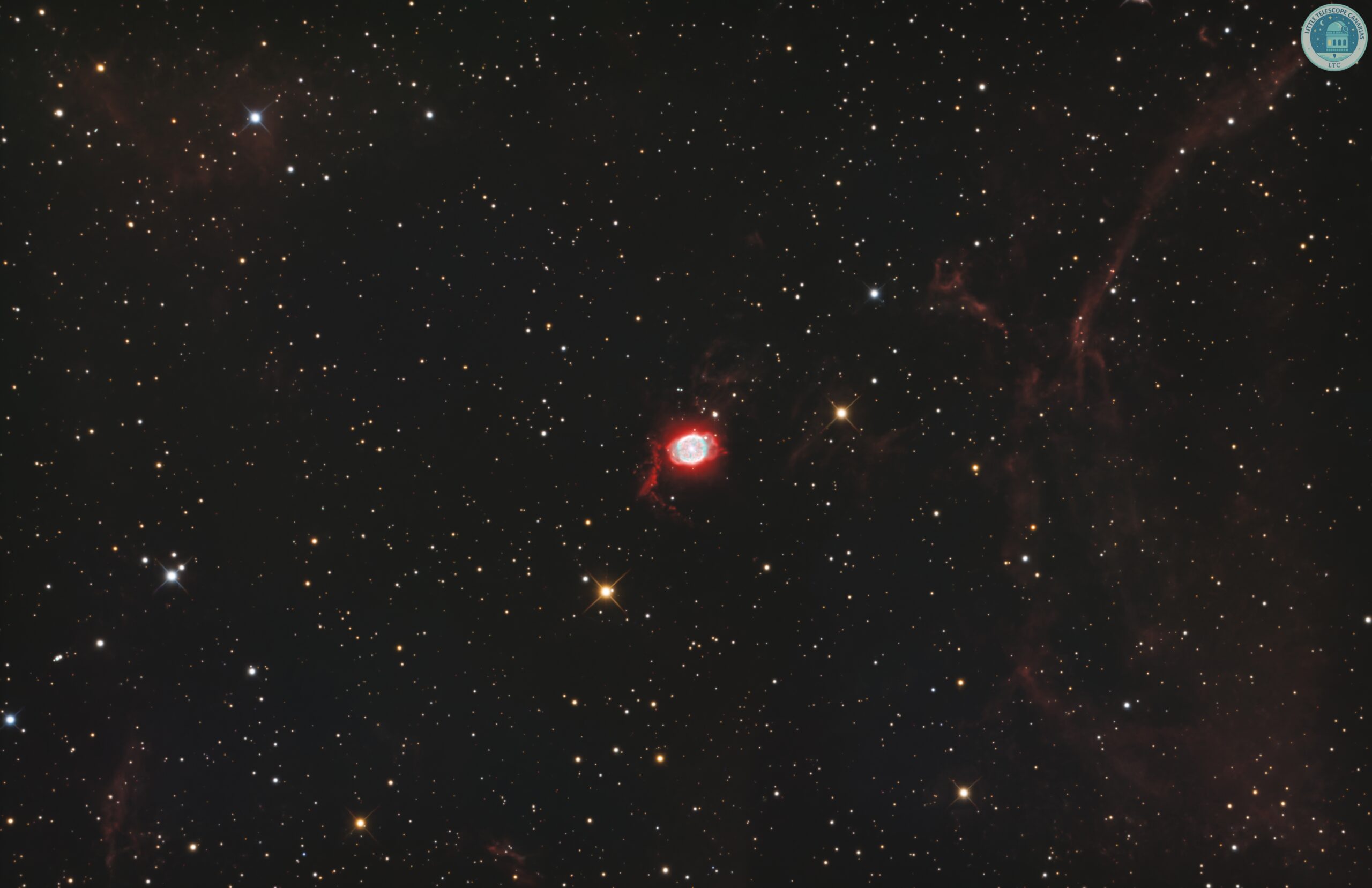
Observing it today is like witnessing an advanced stage of stellar evolution, where the central star transforms its surroundings and contributes to the chemical enrichment of the interstellar medium.