
NGC 7217 – A Nearly Perfect Ring Galaxy
NGC 7217 is a fascinating spiral galaxy located in the constellation of Pegasus, approximately 50 million light-years from Earth. It was discovered by William Herschel on October 17, 1784, and is considered one of the most remarkable examples of an early-type spiral galaxy thanks to its extraordinary symmetry and its system of multiple concentric rings.
Unlike most spiral galaxies, NGC 7217 possesses a remarkably regular disk, showing virtually no signs of significant external disturbances. This makes it an exceptional laboratory for studying the formation and evolution of galactic structures in relatively isolated galaxies.
💥 A Galaxy That Challenges Classical Models
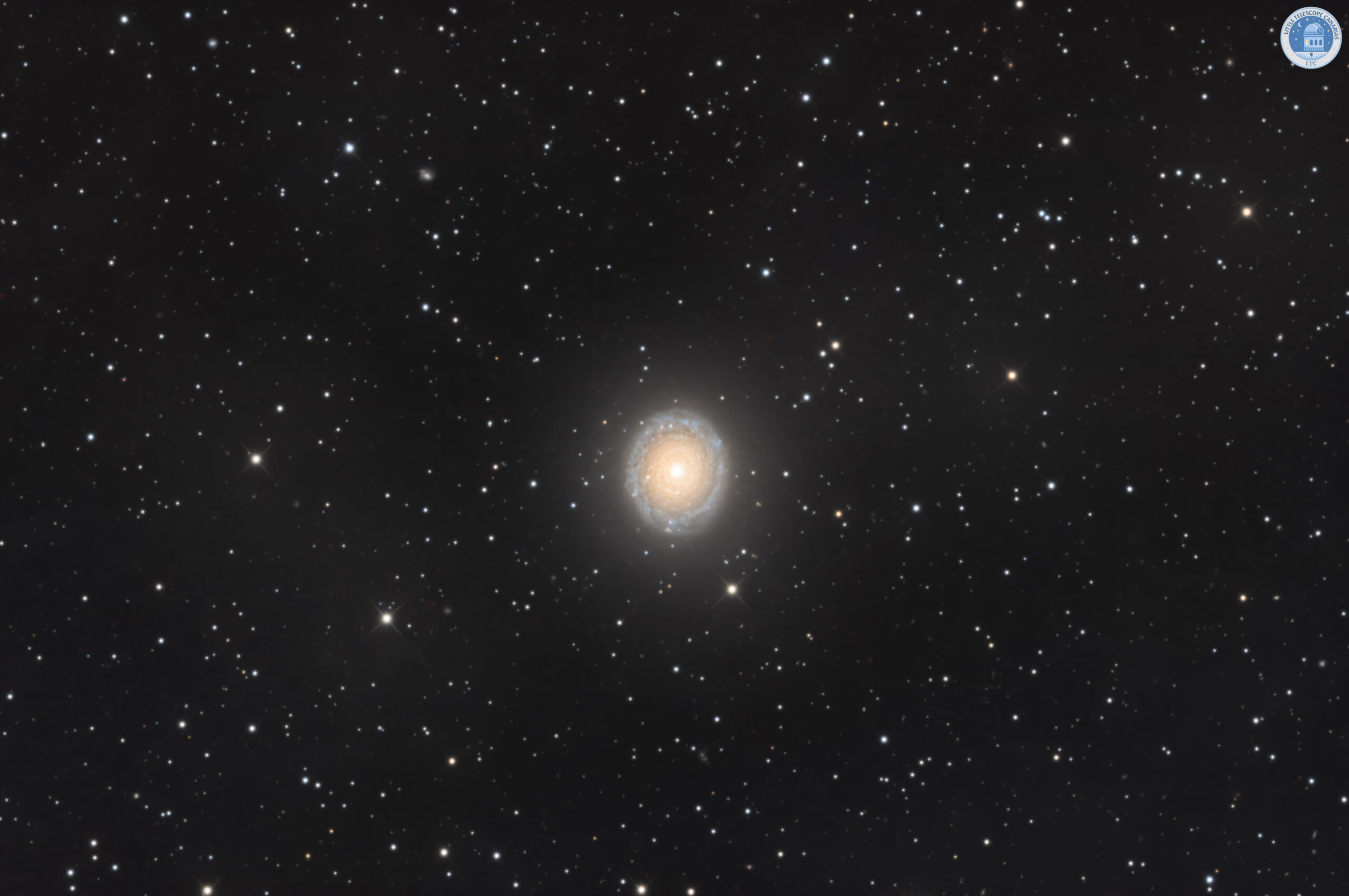
NGC 7217 is distinguished by its three prominent star-forming rings surrounding a bright central bulge. These rings are clearly visible in optical and ultraviolet observations, where young stars illuminate the compressed interstellar gas.
For decades, astronomers believed that ring structures of this kind were primarily formed by the presence of a galactic bar. However, NGC 7217 shows little evidence of a prominent bar today, leading researchers to propose several possible explanations for its rings, including the remnants of a dissolved bar, dynamical resonances, or past episodes of gas accretion. None of these hypotheses has yet been conclusively confirmed.
Another particularly intriguing characteristic is that the galaxy contains stellar and gaseous components with different kinematic properties. Spectroscopic studies have shown that part of the gas in the inner disk rotates differently from the main stellar disk, suggesting that NGC 7217 may have accreted material from small satellite galaxies during its evolutionary history.
📸 Images from LilTecan
The LilTecan team has captured NGC 7217, revealing its bright yellowish nucleus surrounded by several beautifully defined rings, where numerous bluish star-forming regions stand out. Its remarkable symmetry makes this galaxy one of the most elegant deep-sky objects.
🌟 Structure and Main Characteristics
Observational studies have revealed several remarkable features of this galaxy:
- It is classified as an early-type spiral galaxy of type (R)SA(r)ab.
- It is located approximately 50 million light-years from Earth.
- It features three well-defined concentric rings where active star formation is still taking place.
- It does not exhibit a prominent galactic bar, an unusual characteristic for a galaxy with such a highly developed ring system.
- Spectroscopic observations reveal stellar and gaseous components with different kinematics, possibly resulting from past accretion events.
- It is considered one of the finest examples of an isolated ring galaxy, making it an important object for studying the secular evolution of spiral galaxies.
NGC 7217 is an outstanding laboratory for understanding how galaxies evolve in the absence of major gravitational interactions. Its remarkable symmetry, concentric rings, and complex dynamical history demonstrate that even seemingly tranquil galaxies can conceal an unexpectedly rich evolutionary past.
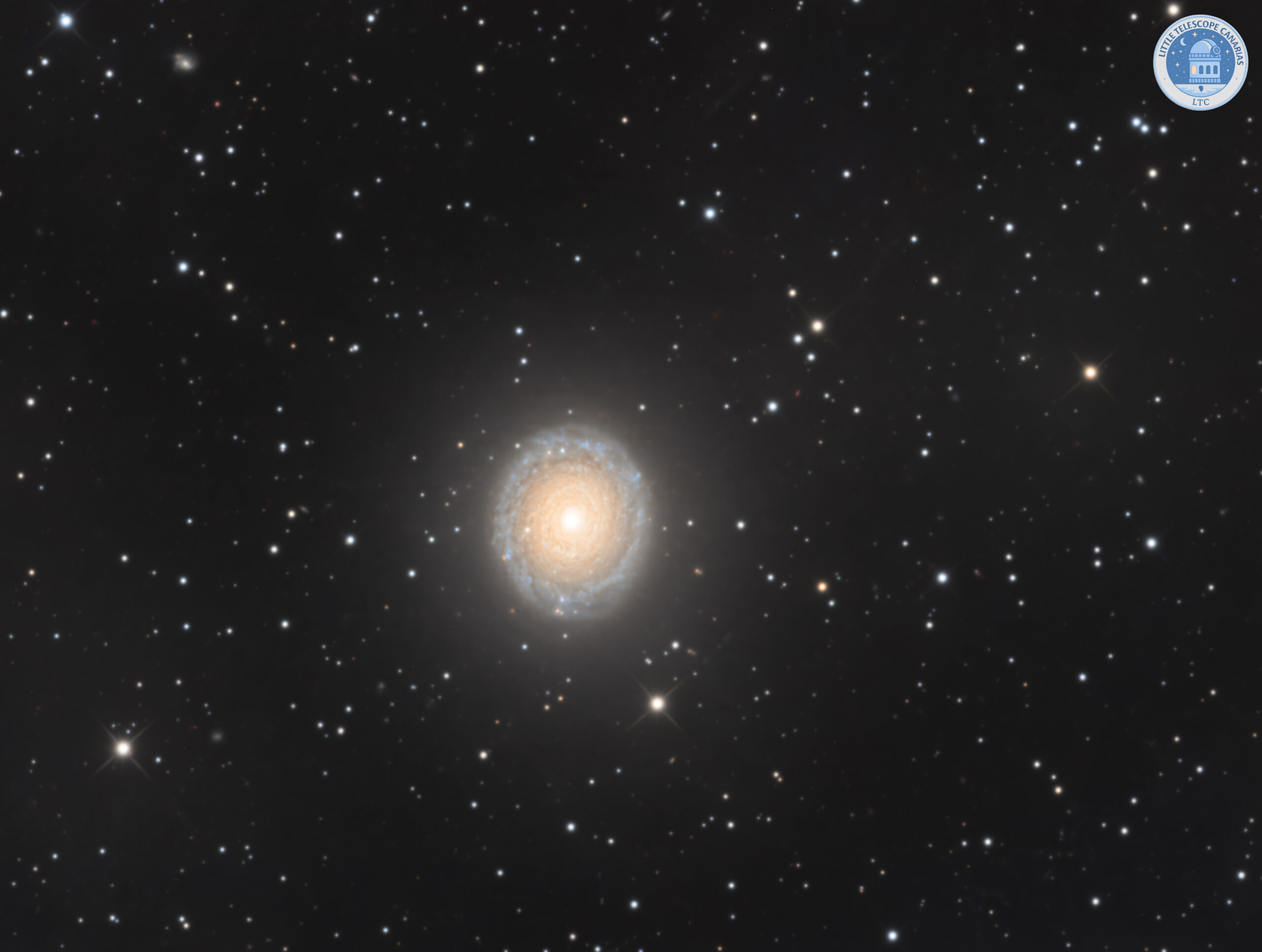
Observing NGC 7217 today is like looking at a galaxy where order prevails over chaos. Its delicate rings of stars encircle a brilliant nucleus like ripples spreading across the surface of a calm lake, reminding us that gravity is capable of creating some of the most elegant structures in the universe