
NGC 6951 – A Spiral Galaxy with an Active Nucleus
NGC 6951 is an intermediate spiral galaxy located in the constellation of Cepheus, approximately 78 million light-years from Earth. Its morphology is classified as SAB(rs)bc, indicating a spiral galaxy with a central bar and an associated ring-like structure.
The galaxy displays well-defined spiral arms surrounding a particularly interesting central region. At its core lies a supermassive black hole, associated with an active galactic nucleus that has been classified in different studies as a Seyfert 2 and, in some cases, as a LINER.
NGC 6951 is also known for its striking circumnuclear ring surrounding the central region. This structure contains gas, dust, and numerous star-forming regions, making it one of the most remarkable features of the galaxy.
🌌 An Active Spiral Galaxy
NGC 6951 belongs to the New General Catalogue (NGC) and is located in a region of the sky dominated by the constellation of Cepheus.
Its spiral structure is crossed by a central bar that plays an important role in the galaxy’s dynamics. Bars can channel gas from the outer regions toward the inner parts of a galaxy, providing material that can contribute both to star formation and to the activity of its nucleus.
In NGC 6951, observations reveal a particularly striking concentration of gas, dust, and stars around the center. There lies a circumnuclear ring approximately 3,700 light-years in diameter, where significant star-forming activity is concentrated.
The activity of the nucleus has been the subject of numerous studies. SIMBAD currently classifies NGC 6951 as a Seyfert 2 galaxy, although the scientific literature also includes classifications such as LINER and transition objects between the two.
📸 Images from LilTecan
NGC 6951 is a particularly attractive target for deep-sky astrophotography.
At first glance, its spiral arms and bright central region immediately stand out, but deep exposures reveal more subtle structures, including the dust lanes crossing the disk and the numerous star-forming regions distributed throughout its spiral arms.
From LilTecan, located beneath the exceptional skies of La Palma, we can capture images of galaxies like this, revealing both their overall structure and their fainter outer details.
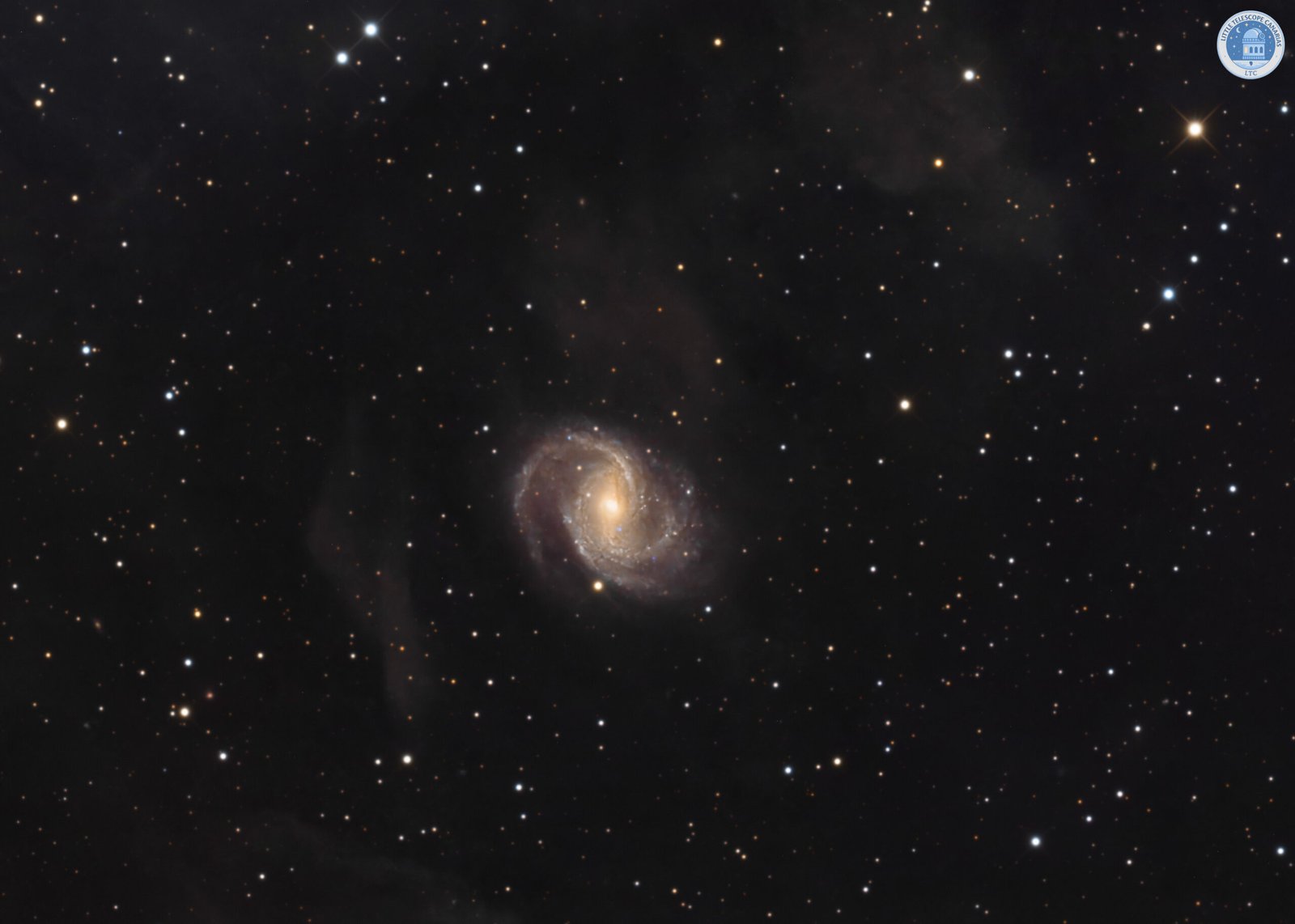
Images taken through LRGB filters can emphasize the different stellar populations and dust structures, while Hα observations can help highlight regions where active star formation is taking place.
🌟 Structure and Main Characteristics
NGC 6951 has a relatively complex structure, but its main characteristics can be summarized in a few points:
- It is an intermediate spiral galaxy classified as SAB(rs)bc.
- It is located in the constellation of Cepheus, approximately 78 million light-years away.
- It has a clearly identifiable central bar.
- Its nucleus shows activity classified as Seyfert 2, although some studies have also classified it as a LINER.
- A circumnuclear ring rich in gas, dust, and star-forming regions surrounds its nucleus.
- The galaxy is approximately 75,000 light-years across, according to NASA.
One of the most interesting aspects of NGC 6951 is precisely the relationship between its bar and the ring surrounding its nucleus.
Astronomers propose that interstellar gas can move along the bar toward the inner regions of the galaxy. Some of this material eventually accumulates in the circumnuclear ring, where conditions favor the formation of new stars.
The ring is approximately 3,700 light-years across and contains a population of star clusters of different ages. According to Hubble observations, the average age of many of these clusters is between 200 and 300 million years, although some may be around one billion years old.
This combination of a bar, star-forming ring, and active nucleus makes NGC 6951 an excellent laboratory for studying how gas moves within a galaxy and how these processes are connected to star formation and activity around the central black hole.
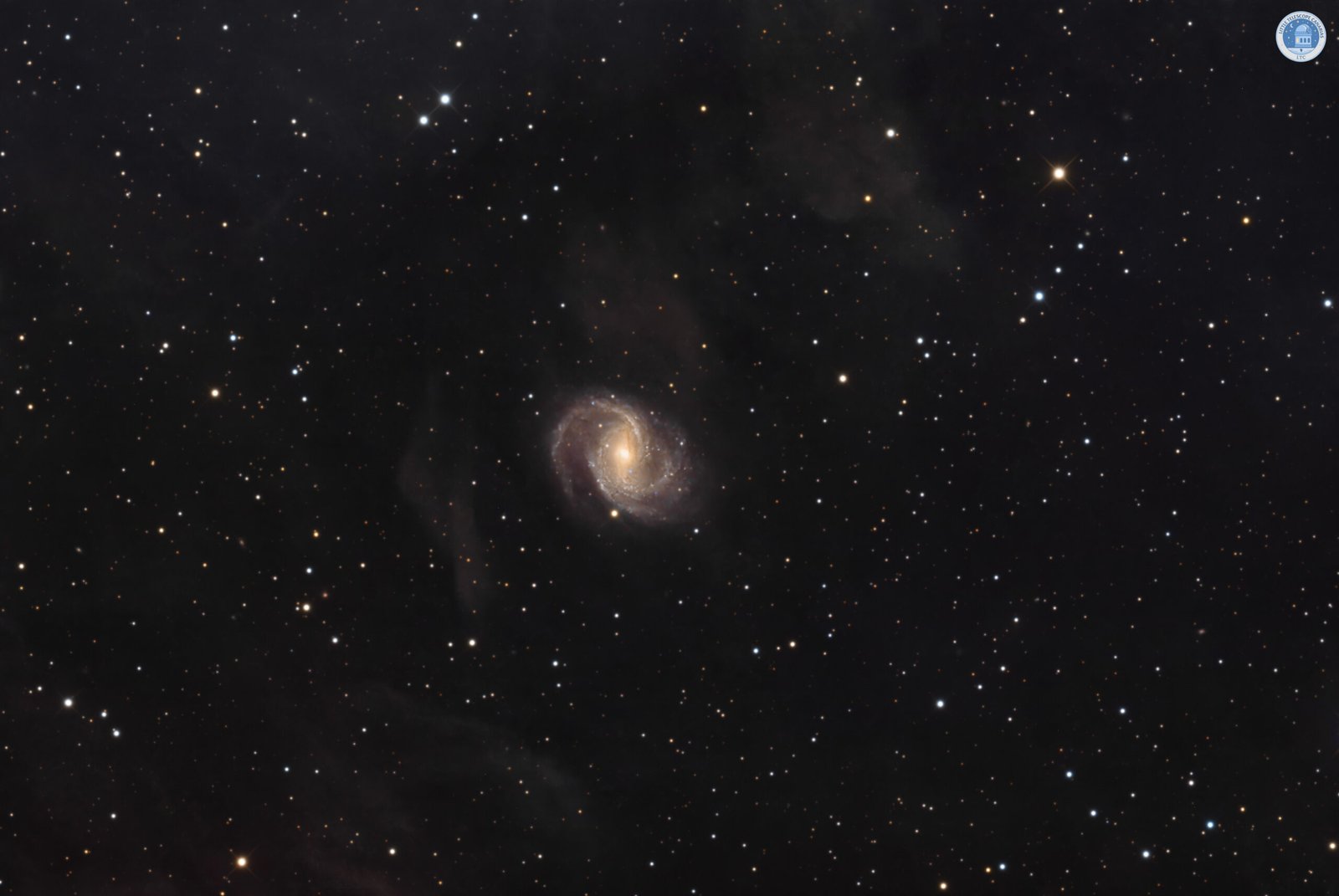
At a distance of approximately 78 million light-years, the light we receive from NGC 6951 began its journey when modern human civilization did not yet exist on Earth.
When we observe this galaxy from LilTecan, we are not simply seeing a collection of stars: we are capturing the structure of an entire galaxy, its spiral arms, its star-forming regions, and the activity taking place around its nucleus.
A long-exposure image allows us to transform that faint glow into a window onto the evolution of a galaxy located tens of millions of light-years away.