
M16 – The Eagle Nebula and the Pillars of Creation
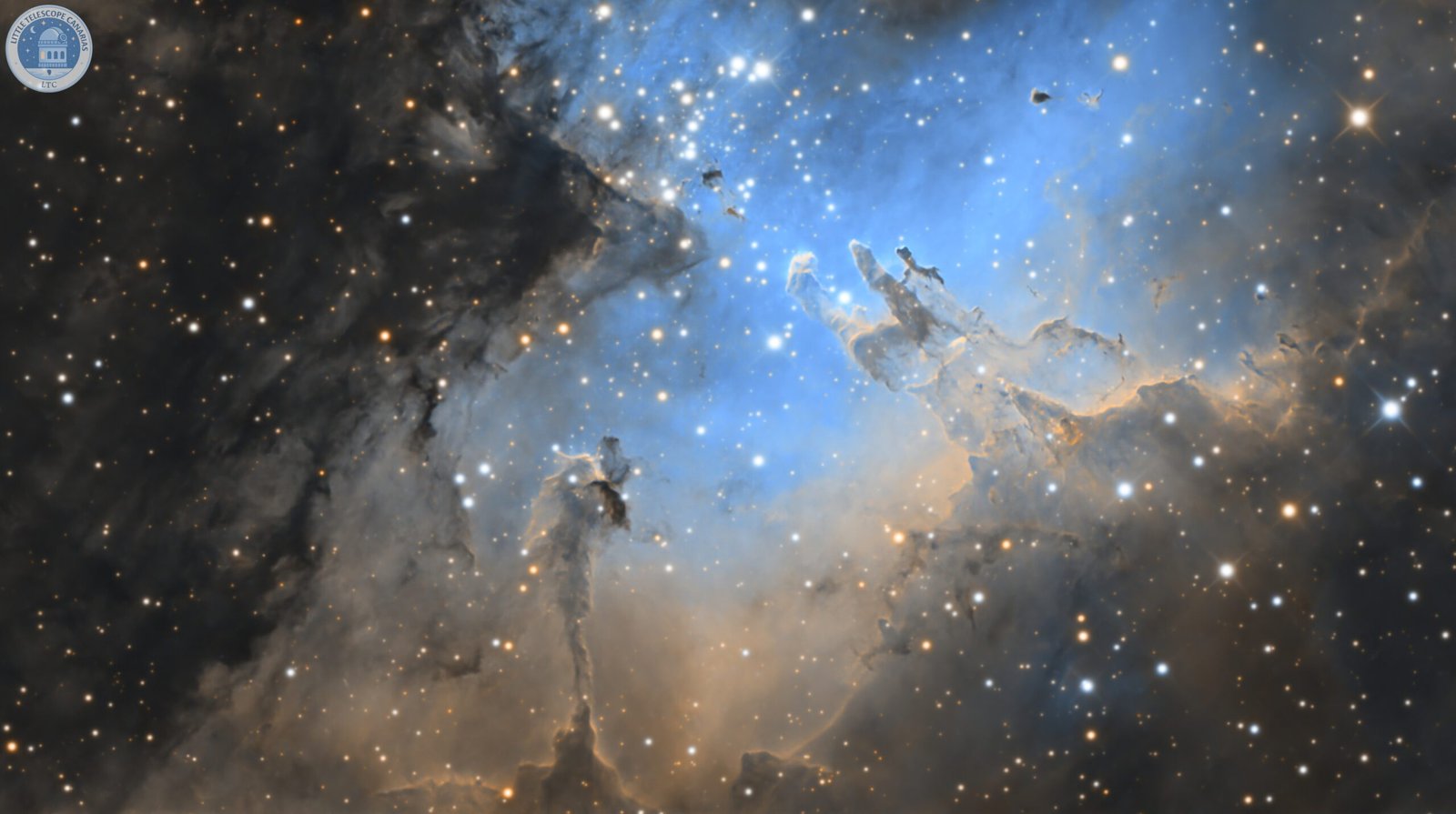
M16, popularly known as the Eagle Nebula, is an extensive star-forming region located in the constellation of Serpens. Within it lies one of the most recognizable structures in modern astronomy: the Pillars of Creation, enormous columns of interstellar gas and dust that are undergoing erosion due to the intense radiation and stellar winds produced by the young and massive stars in the region.
The region is approximately 7,000 light-years from Earth, according to NASA and ESO. M16 encompasses a star-forming region that includes both the emission nebula IC 4703 and the open cluster NGC 6611.
The Pillars of Creation are located in a particularly dense area of this cloud of gas and dust. The densest structures have resisted the effects of ultraviolet radiation from the massive stars in the cluster for longer, while the less dense material surrounding them has been eroded. The result is the spectacular columns we observe today.
🦅 The Eagle Nebula
The Eagle Nebula is a star-forming region located in the constellation of Serpens. Its designation as M16 comes from the catalogue compiled by Charles Messier.
NASA indicates that the nebula was discovered in 1745 by the Swiss astronomer Jean-Philippe Loys de Chéseaux. The region has an apparent magnitude of approximately 6, although observing the Pillars of Creation requires larger telescopes and favourable observing conditions.
The name “Eagle” is related to the overall appearance of the nebula in wide-field images. The Pillars of Creation occupy only a small part of the total extent of M16. NASA estimates that the entire nebula is approximately 70 × 55 light-years across, while the main pillars extend only a few light-years.
M16 contains the young star cluster NGC 6611, whose hot and massive stars are responsible for much of the radiation that illuminates and modifies the gas and dust in the region.
📸 Images from LilTecan
The LilTecan team has captured M16. The region shows intense emission from ionized gas, combined with large amounts of dust that obscure certain areas. Images obtained using narrowband filters are particularly effective at highlighting the emission structures associated with the gas.
🌟 Structure and main characteristics
Observations of M16 have established numerous characteristics of this region:
- M16 is popularly known as the Eagle Nebula.
- It is located in the constellation of Serpens.
- The estimated distance is approximately 7,000 light-years.
- The region includes the emission nebula IC 4703 and the open cluster NGC 6611.
- NGC 6611 contains young and massive stars that illuminate and erode the gas and dust structures.
- The main pillars are approximately 4–5 light-years high, according to NASA.
- Another prominent structure in the region, known as The Spire, reaches approximately 9.5 light-years in length.
- The entire Eagle Nebula extends approximately 70 × 55 light-years.
The Pillars of Creation became world-famous thanks to an image obtained by the Hubble Space Telescope in 1995, using the Wide Field and Planetary Camera 2 (WFPC2).
The image showed three large columns of gas and dust projected against the bright background of the nebula. Hubble’s extraordinary resolution made it possible to observe the structures on the surface of the pillars in remarkable detail.
In 2014, Hubble observed the region again using the Wide Field Camera 3 (WFC3). This new observation produced higher-resolution images and also allowed the pillars to be observed in both visible and infrared light.
The infrared observation made it possible to penetrate part of the dust that blocks visible light and reveal young stars located within or behind the structures.
Comparison of the images also made it possible to detect changes in a jet emerging from a young star located within the pillars. NASA reports that the jet had increased in length by approximately 60 billion miles between the observations.
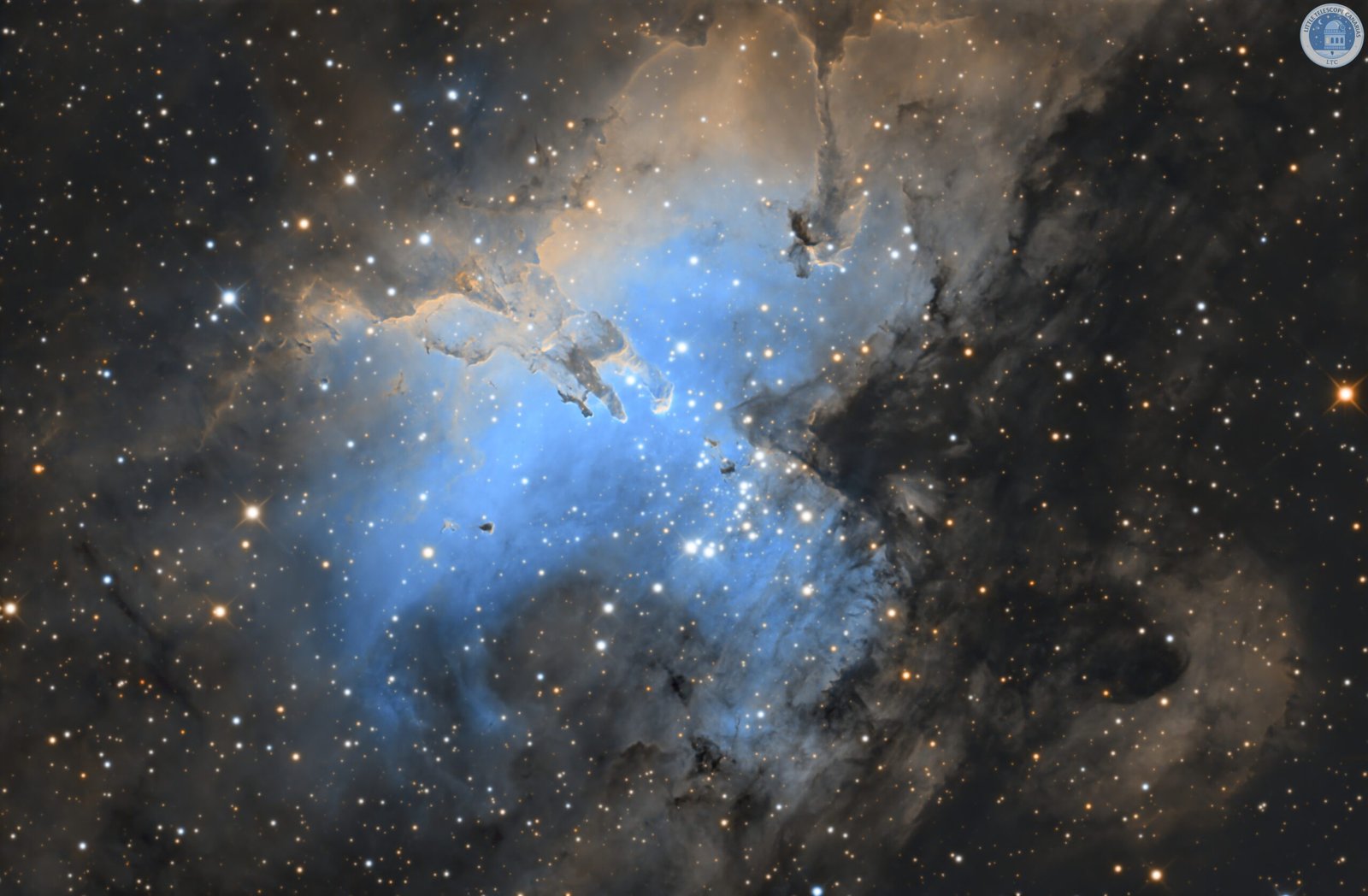
The Eagle Nebula is much more than one of the most famous images ever produced by the Hubble Space Telescope.
M16 is an active star-forming region where enormous amounts of gas and dust interact with the young and massive stars of the NGC 6611 cluster.
At the heart of this region are the Pillars of Creation, enormous columns of interstellar material that are simultaneously being illuminated, eroded, and transformed by radiation from the surrounding stars.
Within these columns are regions dense enough to harbour young stars, while the less dense material is progressively being expelled by the intense ultraviolet radiation and stellar winds.