
M104 – The Sombrero Galaxy
M104, known as the Sombrero Galaxy, is a spiral galaxy located in the constellation of Virgo, about 29 million light-years from Earth. It was discovered by Pierre Méchain in 1781 and later included in the catalog of Charles Messier.
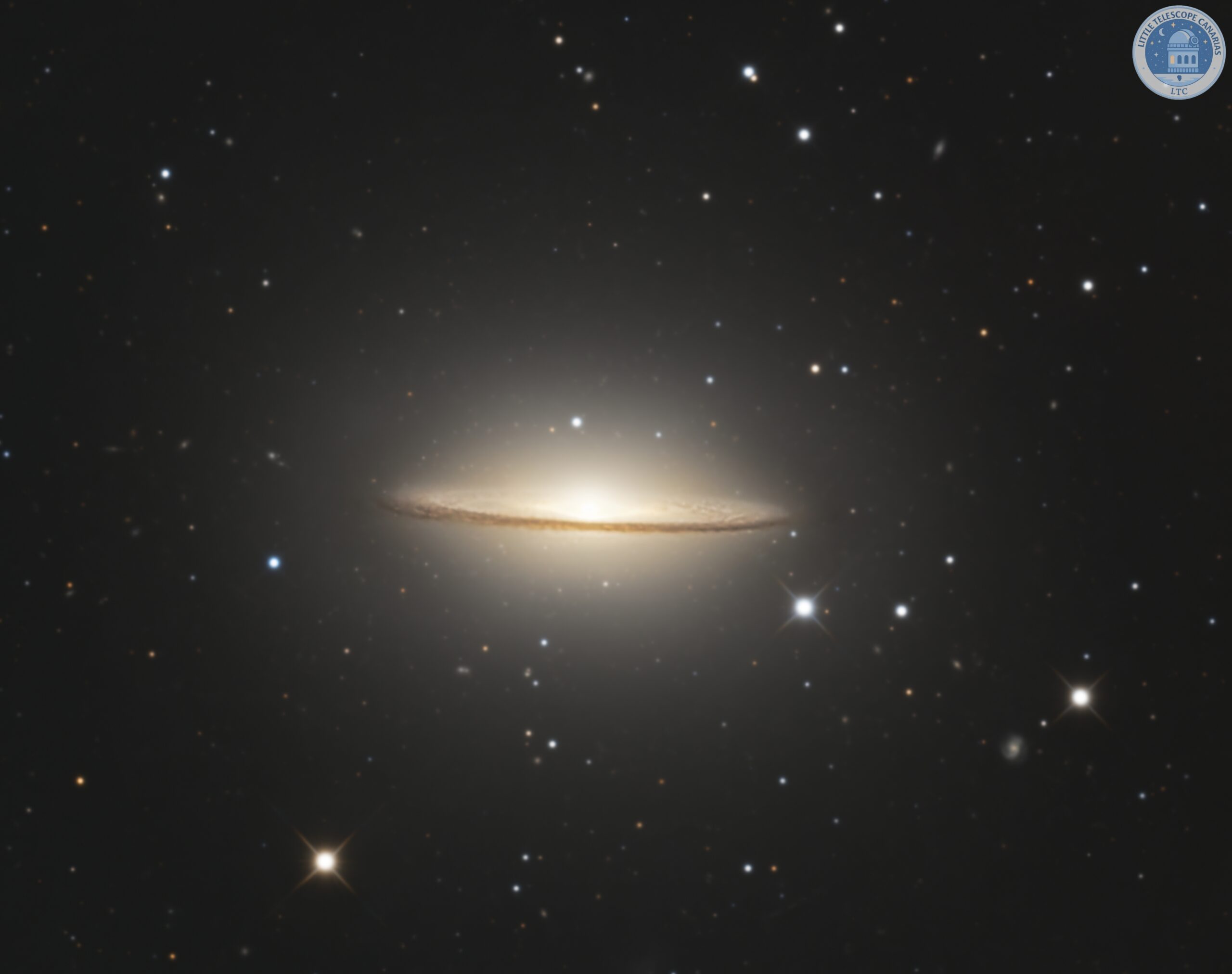
Its most distinctive feature is its bright nucleus and the prominent dust lane crossing its disk, giving it the appearance of a wide-brimmed hat.
💥 An extremely bright nucleus
M104 is notable for hosting a supermassive black hole at its center, with an estimated mass of billions of times that of the Sun. This compact and luminous core visually dominates the galaxy.
In addition, its large population of globular clusters—far greater than that of the Milky Way—suggests a complex evolutionary history, possibly influenced by past mergers.
📸 Images from LilTecan
The LilTecan team has captured M104, highlighting its intense central bulge, the dark dust lane crossing its disk, and the surrounding halo.
🌟 Structure and key characteristics
Modern studies have revealed several important features:
- It has an extremely bright central bulge, dominant in its morphology.
- It features a well-defined dark dust lane encircling the disk.
- Its angular size is about 8–9 arcminutes, easily observable with medium-sized telescopes.
- It contains a large number of globular clusters, on the order of thousands.
- Its structure suggests a combination of spiral and elliptical characteristics.
- Its nucleus shows signs of moderate energetic activity.
M104 —the Sombrero Galaxy— is one of the most iconic deep-sky objects. Its unmistakable appearance and complex structure make it a key object for studying galactic evolution.
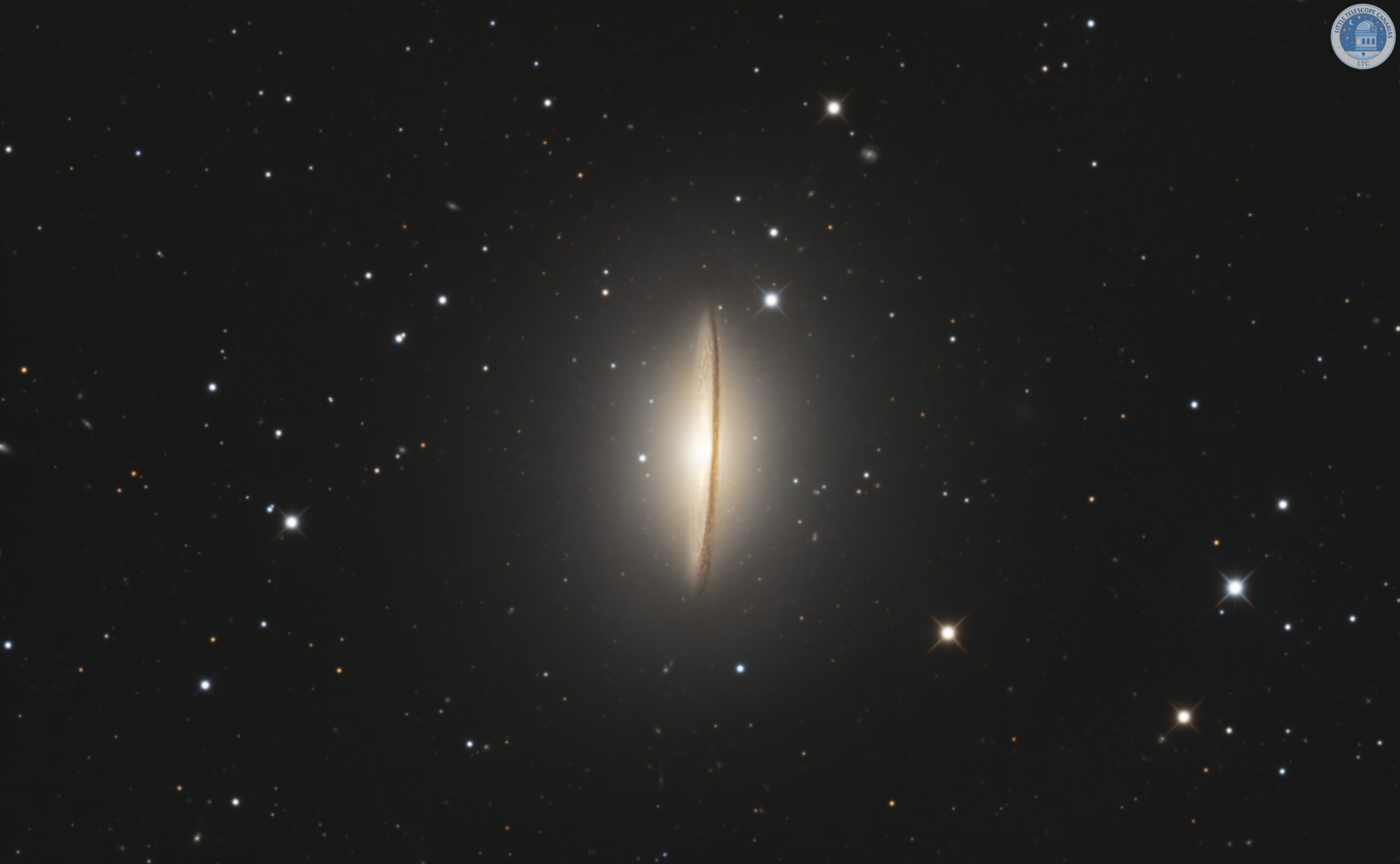
Observing it today is like contemplating a majestic galaxy, where light and dust create one of the most elegant silhouettes in the universe, reminding us of the richness and diversity of cosmic structures.