
NGC 5128 – Centaurus A, the Closest Active Giant Galaxy
NGC 5128, better known as Centaurus A (Cen A), is one of the most extraordinary galaxies in the nearby universe. Located in the constellation of Centaurus, at a distance of approximately 11–13 million light-years, it is the closest active radio galaxy to Earth and one of the brightest galaxies in the southern sky.
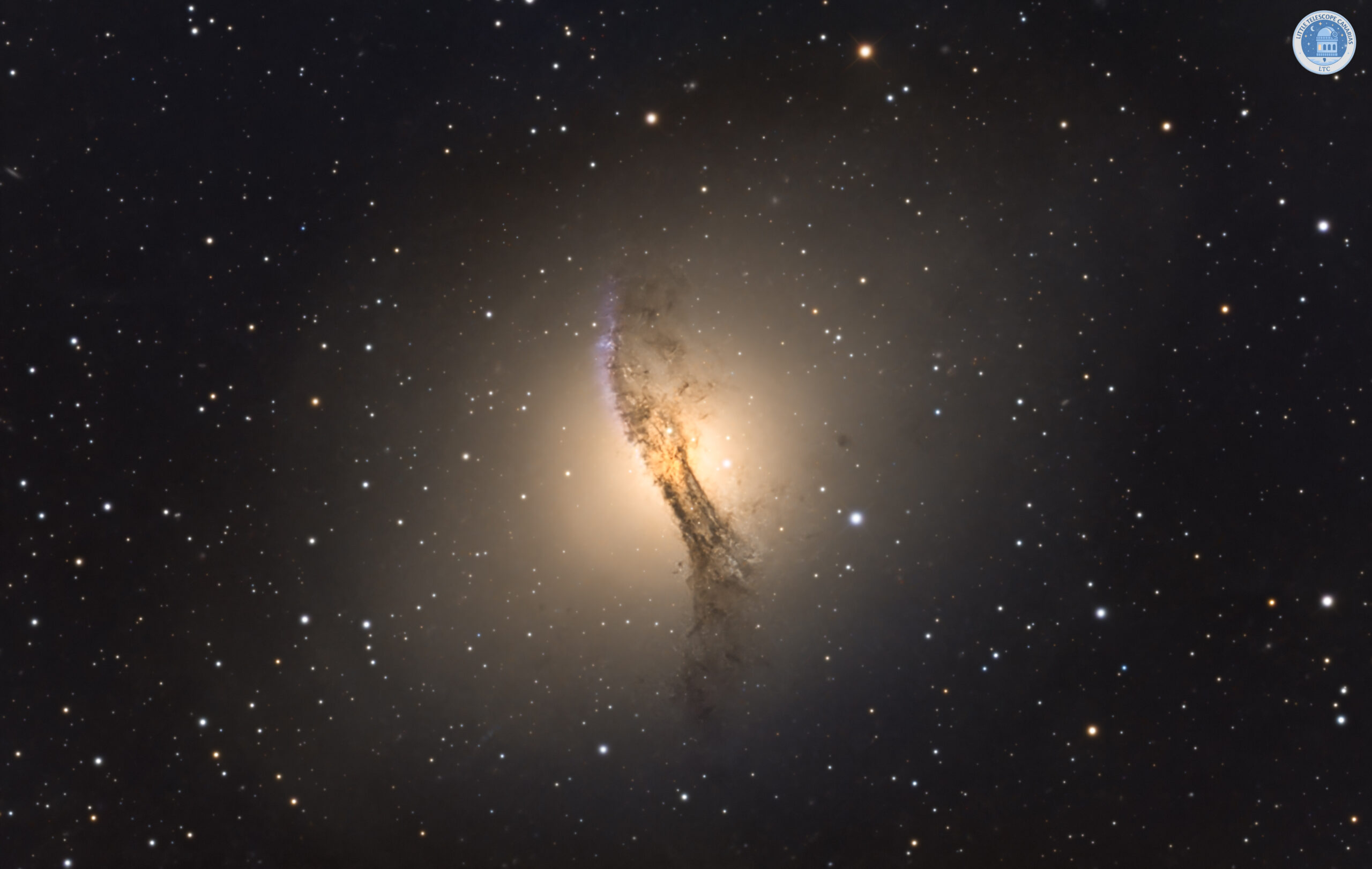
Discovered by James Dunlop in 1826, NGC 5128 is instantly recognizable by the spectacular dark dust lane that bisects its bright elliptical body. This striking appearance is the result of a galactic merger between a giant elliptical galaxy and a smaller spiral galaxy that occurred hundreds of millions of years ago.
💥 A Galactic Collision Powered by a Supermassive Black Hole
Centaurus A is a remarkable example of how galaxy mergers drive galactic evolution.
The prominent dust lane crossing its center is the remnant of the spiral galaxy that was absorbed by the larger elliptical. This collision supplied enormous amounts of gas and dust, triggering vigorous star formation while feeding the galaxy’s central supermassive black hole.
Today, the active nucleus launches powerful relativistic jets that emit strongly in radio, X-ray, and gamma-ray wavelengths. These jets extend far beyond the visible galaxy, feeding gigantic radio lobes that stretch hundreds of thousands of light-years into intergalactic space, making Centaurus A one of the most extensively studied active galaxies in astronomy.
📸 Images from LilTecan
The LilTecan team has captured Centaurus A, highlighting its brilliant elliptical halo, the dramatic dust lane crossing its center, and the intricate network of dark filaments and star-forming regions that make this galaxy one of the most spectacular deep-sky targets in the southern hemisphere.
🌟 Structure and Main Characteristics
Observational studies have revealed numerous remarkable properties of this galaxy:
- It is the closest active radio galaxy to Earth.
- It is believed to be the product of a merger between a giant elliptical galaxy and a spiral galaxy.
- Its central dust lane contains abundant gas, dust, and active star-forming regions.
- Its nucleus hosts a supermassive black hole that powers powerful relativistic jets.
- Giant radio lobes extend hundreds of thousands of light-years beyond the visible galaxy.
- It hosts a rich system of globular clusters, making it an important laboratory for studying galaxy formation and evolution.
Centaurus A is far more than a peculiar-looking galaxy. It is one of the most important nearby laboratories for understanding galaxy mergers, active galactic nuclei, black hole accretion, and the formation of massive elliptical galaxies. Its proximity allows astronomers to study these processes in exceptional detail, providing key insights into the evolution of galaxies throughout the universe.
Observing Centaurus A today is like witnessing the aftermath of an ancient cosmic collision. Beneath its dark band of dust lies a restless supermassive black hole, while powerful jets and newborn stars reveal that this galaxy is still being shaped by the dramatic events of its past.