
NGC 2371 – The Double Nebula in Gemini
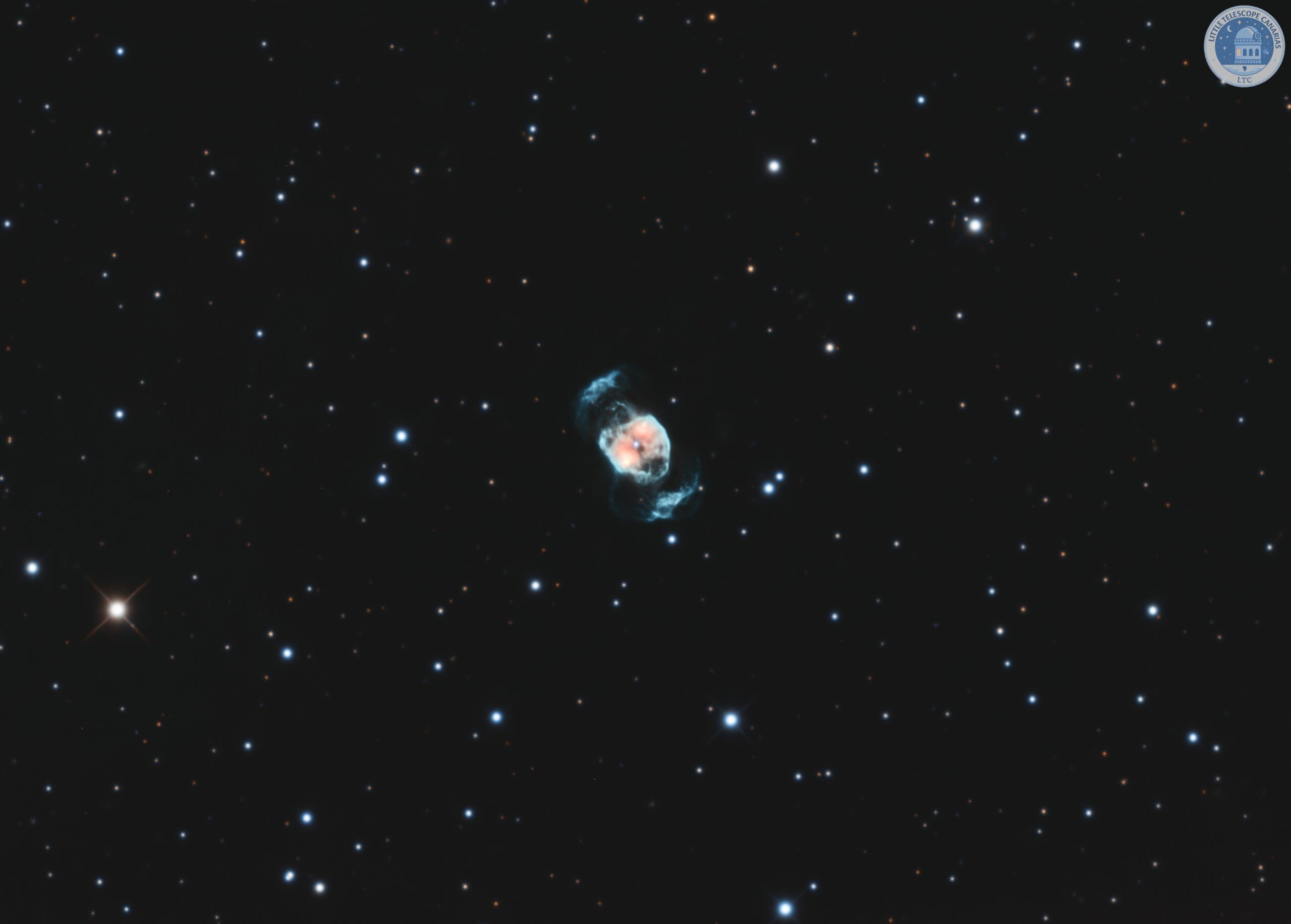
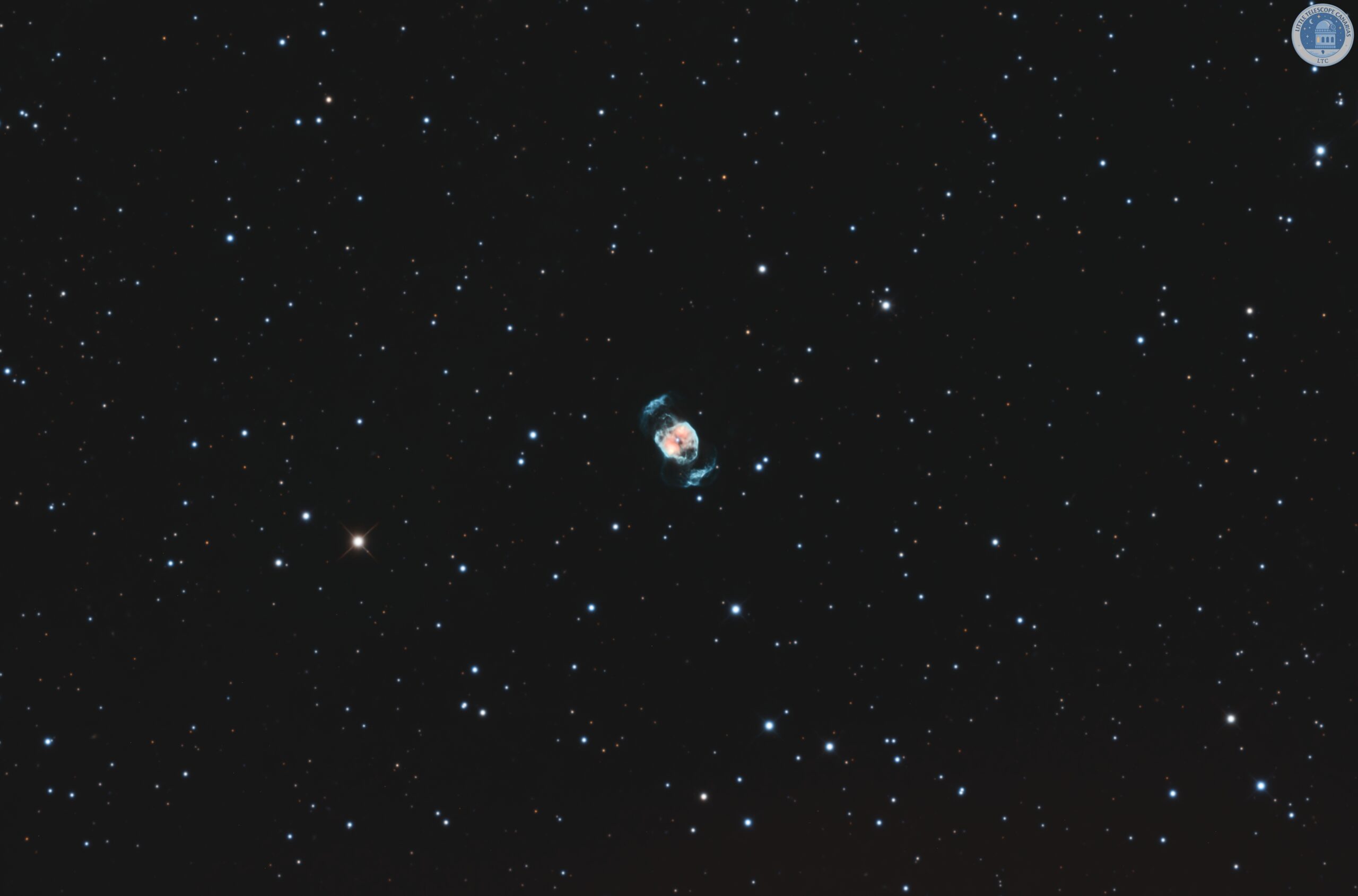
The NGC 2371, also known as NGC 2372, is a planetary nebula located in the constellation of Gemini, about 4,000 light-years from Earth. It was discovered by William Herschel in 1785, and its peculiar appearance led it to be cataloged initially as two separate objects.
Its elongated shape and two bright lobes make it a particularly interesting example among planetary nebulae.
💥 The end of a star
NGC 2371 represents an advanced stage in the evolution of Sun-like stars. After exhausting its nuclear fuel, the progenitor star expelled its outer layers, forming an expanding gaseous shell.
At its center remains an extremely hot white dwarf, whose intense ultraviolet radiation ionizes the surrounding gas. This process produces its characteristic glow, dominated by ionized oxygen emissions responsible for its bluish tones.
📸 Images from LilTecan
The LilTecan team has captured this nebula using different filters, revealing its complex internal structure as well as faint and extended outer regions.
🌟 A bipolar and dynamic morphology
Observational studies have revealed key aspects of its structure:
- It exhibits a bipolar morphology, with two well-defined main lobes.
- Its angular size is approximately 50–60 arcseconds, corresponding to about 1 light-year in extent.
- It shows low-ionization knots and filaments, indicating dynamic mass ejection processes.
- The gas temperature is around 10,000–12,000 K, with relatively low densities.
- Its spectrum is dominated by emission lines such as [O III], Hα, and [N II].
- The observed asymmetry suggests the possible influence of a binary companion or magnetic fields.
NGC 2371 —the Double Nebula— is an excellent example of the complexity planetary nebulae can reach. Its structure and evolution help us better understand the final stages of stellar life.
Observing it today is witnessing the future fate of stars like our Sun, in a process that enriches the interstellar medium and contributes to the formation of new generations of stars.