
NGC 2392 – The Eskimo Nebula
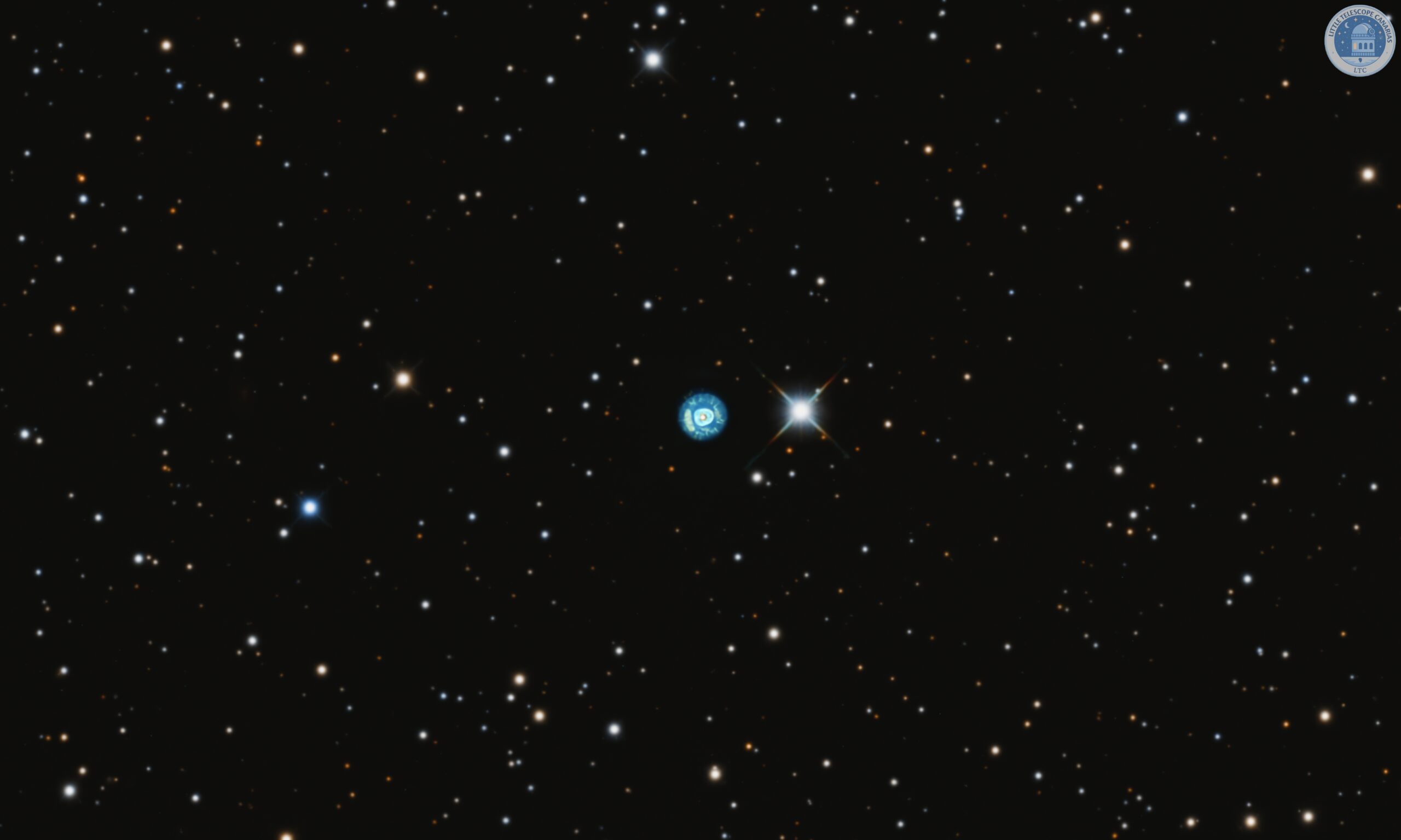
NGC 2392, known as the Eskimo Nebula, is a planetary nebula located in the constellation of Gemini, about 4,000–5,000 light-years from Earth. It was discovered by William Herschel in 1787 and owes its nickname to its appearance, resembling a face surrounded by a hood.
Its complex structure and bright inner region make it one of the most striking objects of its kind.
💥 The end of a star
Like all planetary nebulae, NGC 2392 is the result of the evolution of a Sun-like star. At the end of its life, the star expelled its outer layers, creating an expanding shell of gas.
At its center lies a very hot white dwarf, whose ultraviolet radiation ionizes the surrounding gas. This process produces its characteristic glow, with greenish and bluish tones dominated by ionized oxygen emissions.
📸 Images from LilTecan
The LilTecan team has captured the Eskimo Nebula in different wavelengths, revealing its complex internal structure and the delicate layers of gas surrounding it.
🌟 A layered and highly energetic structure
Modern studies have revealed fascinating details about this nebula:
- It shows a double-shell structure, with a bright inner region and a more diffuse outer envelope.
- Its angular size is about 40–50 arcseconds, corresponding to roughly 1 light-year.
- It exhibits filaments, jets, and knots of gas, indicating dynamic mass ejection episodes.
- The gas temperature is around 10,000–15,000 K, with local variations.
- Its spectrum is dominated by emission lines such as [O III], Hα, and He II, indicating a high degree of ionization.
- A possible binary companion has been suggested, which could explain its complex morphology.
NGC 2392 —the Eskimo Nebula— is a spectacular example of how stars can create rich and complex structures at the end of their lives. Its unique appearance and energetic physics make it a key object for the study of planetary nebulae.
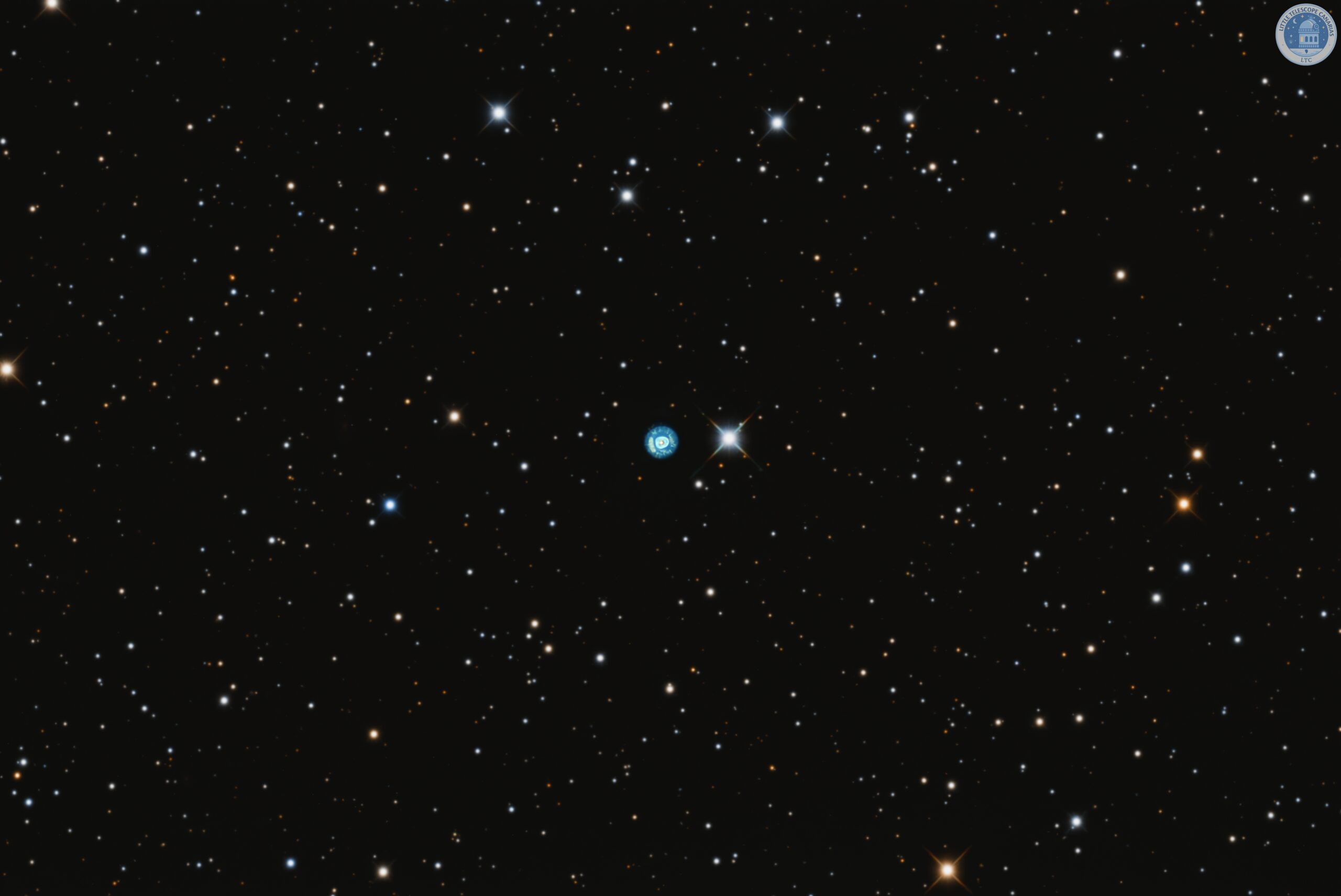
Observing it today is witnessing the final fate of stars like our Sun, in a process that transforms and enriches the interstellar medium, seeding the elements needed for future generations of stars and planets.