
NGC 6445 – The Box Nebula
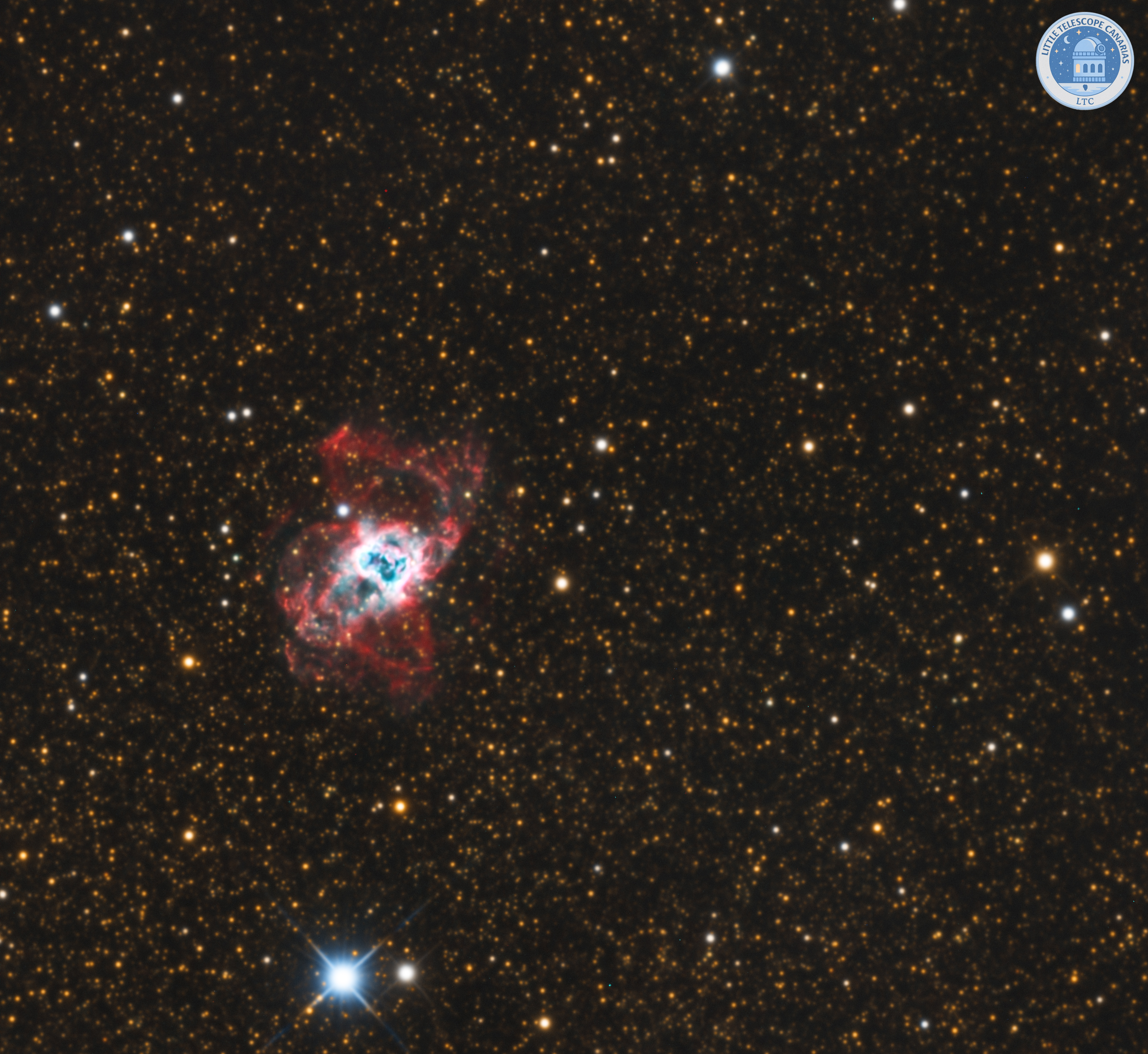
NGC 6445, popularly known as the Box Nebula, is a planetary nebula located in the constellation of Sagittarius, at an estimated distance of 4,000 to 5,000 light-years from Earth. It was discovered by William Herschel on May 28, 1786, and is one of the most remarkable examples of a bipolar planetary nebula with a highly complex morphology. Its irregular appearance and bright central structure make it an excellent laboratory for studying the final stages in the evolution of Sun-like stars.
NGC 6445 represents the stage in which a dying star has expelled its outer layers into space while its remaining core continues evolving toward a white dwarf. The intense ultraviolet radiation emitted by the central star ionizes the surrounding gas, producing the characteristic optical emission lines that make the nebula so striking.
💥 A Bipolar Nebula in Continuous Expansion
Although it was long described as a rectangular or “box-shaped” planetary nebula, high-resolution observations obtained with the Hubble Space Telescope, together with numerous spectroscopic studies, have revealed that NGC 6445 possesses a far more intricate structure.
Its morphology is dominated by a bipolar core accompanied by expanding gaseous lobes, filaments, and condensations that point to multiple episodes of mass ejection. These structures suggest that the progenitor star experienced highly directional mass loss during the final stages of its evolution.
Images obtained in different emission lines reveal a clear chemical stratification. [O III] emission dominates the hotter inner regions, while Hα and [N II] are strongest in the outer shells and denser portions of the nebula. This layered structure provides valuable insight into the changing physical conditions within the expanding gas.
📸 Images from LilTecan
The LilTecan team has captured NGC 6445, revealing its bright central region and the delicate bipolar structures extending outward from the nucleus. Narrowband imaging highlights the striking contrast between the oxygen-rich emission and the regions dominated by hydrogen and nitrogen, showcasing the extraordinary structural complexity of this planetary nebula.
🌟 Structure and Main Characteristics
Observational studies have identified several remarkable properties of this nebula:
- It is classified as a bipolar planetary nebula.
- It is located in the constellation of Sagittarius.
- It was discovered by William Herschel on May 28, 1786.
- Its estimated distance is 4,000–5,000 light-years, although published values vary depending on the measurement method.
- It exhibits a complex bipolar structure consisting of expanding lobes, gaseous filaments, and condensations.
- Its emission is dominated by [O III], Hα, and [N II], revealing regions with different ionization conditions throughout the nebula.
- The central star is continuing its evolution toward becoming a white dwarf, providing the ultraviolet radiation that ionizes the expelled gas.
NGC 6445 is one of the most impressive examples of how planetary nebulae can develop shapes far removed from a simple spherical shell. Its bipolar lobes, intricate filamentary structure, and intense emission make it an outstanding laboratory for understanding the mechanisms that govern stellar mass loss and the formation of planetary nebulae.
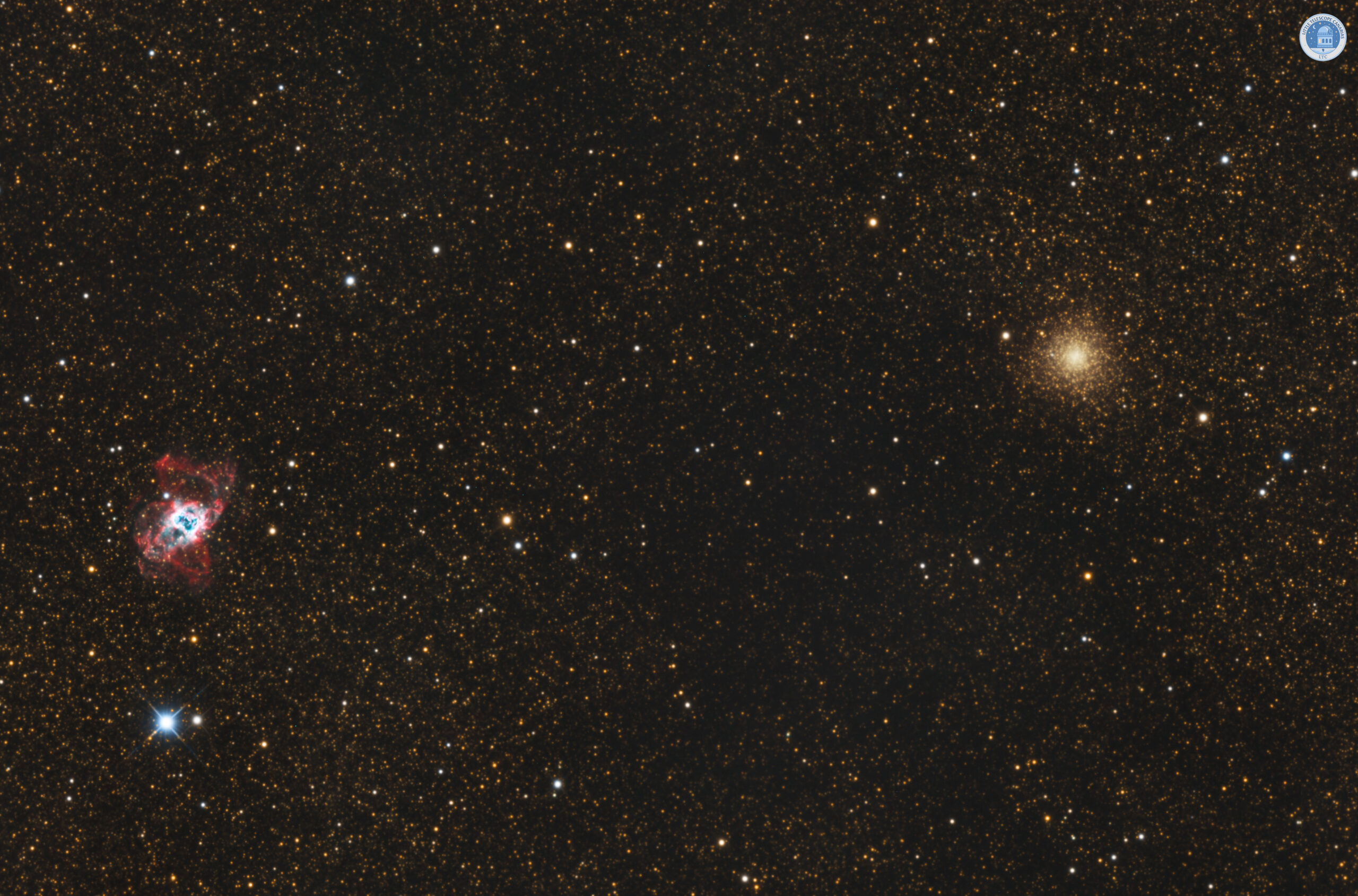
Observing NGC 6445 today is like witnessing a star writing the final chapter of its life. Its brilliant clouds of gas, sculpted by powerful stellar winds and illuminated by the intense radiation of its central star, form a true cosmic sculpture that will continue expanding until it gradually merges with the interstellar medium, enriching our Galaxy with the elements forged throughout the star’s lifetime.