
NGC 7008 – The Fetus Nebula
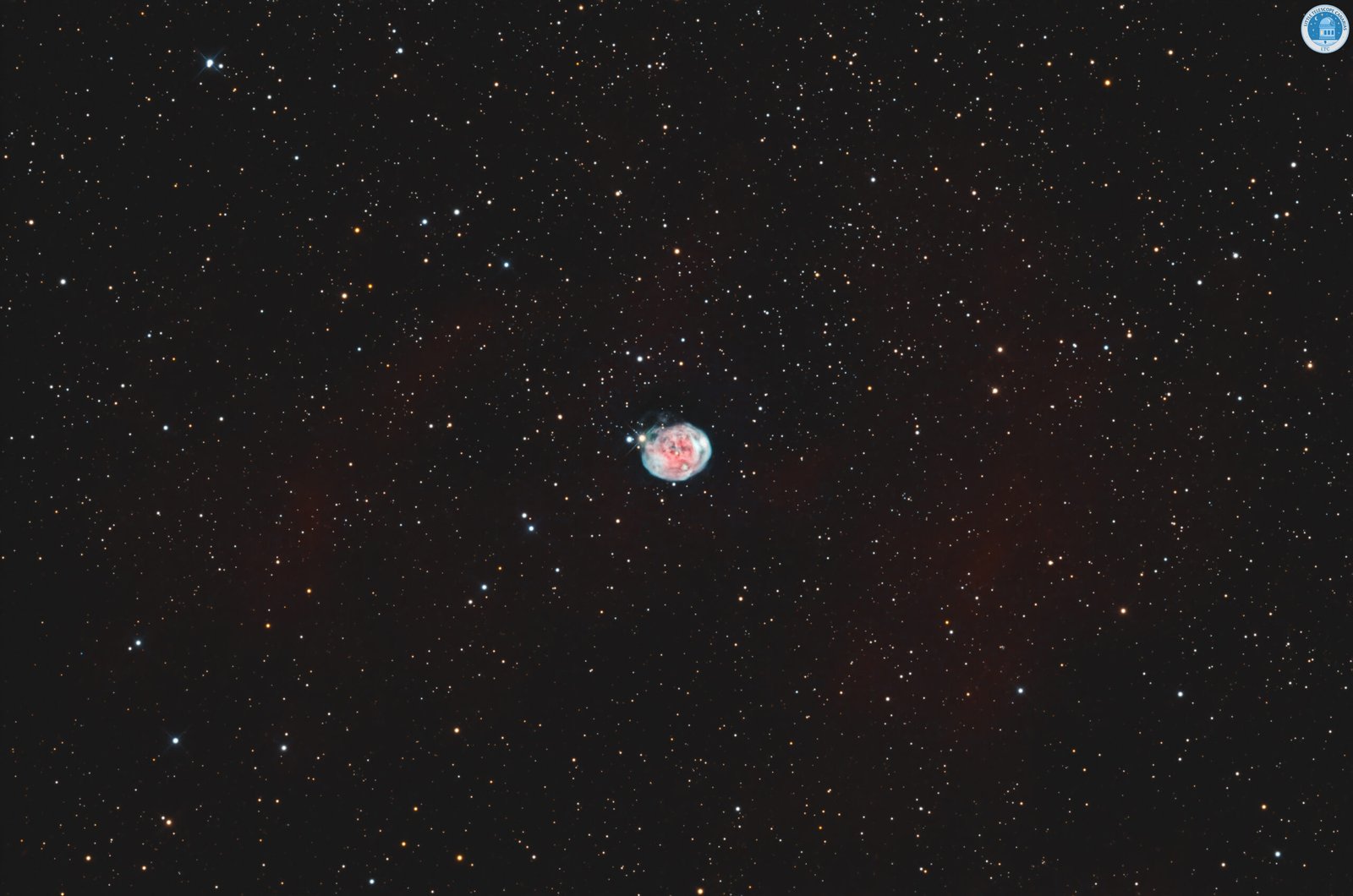
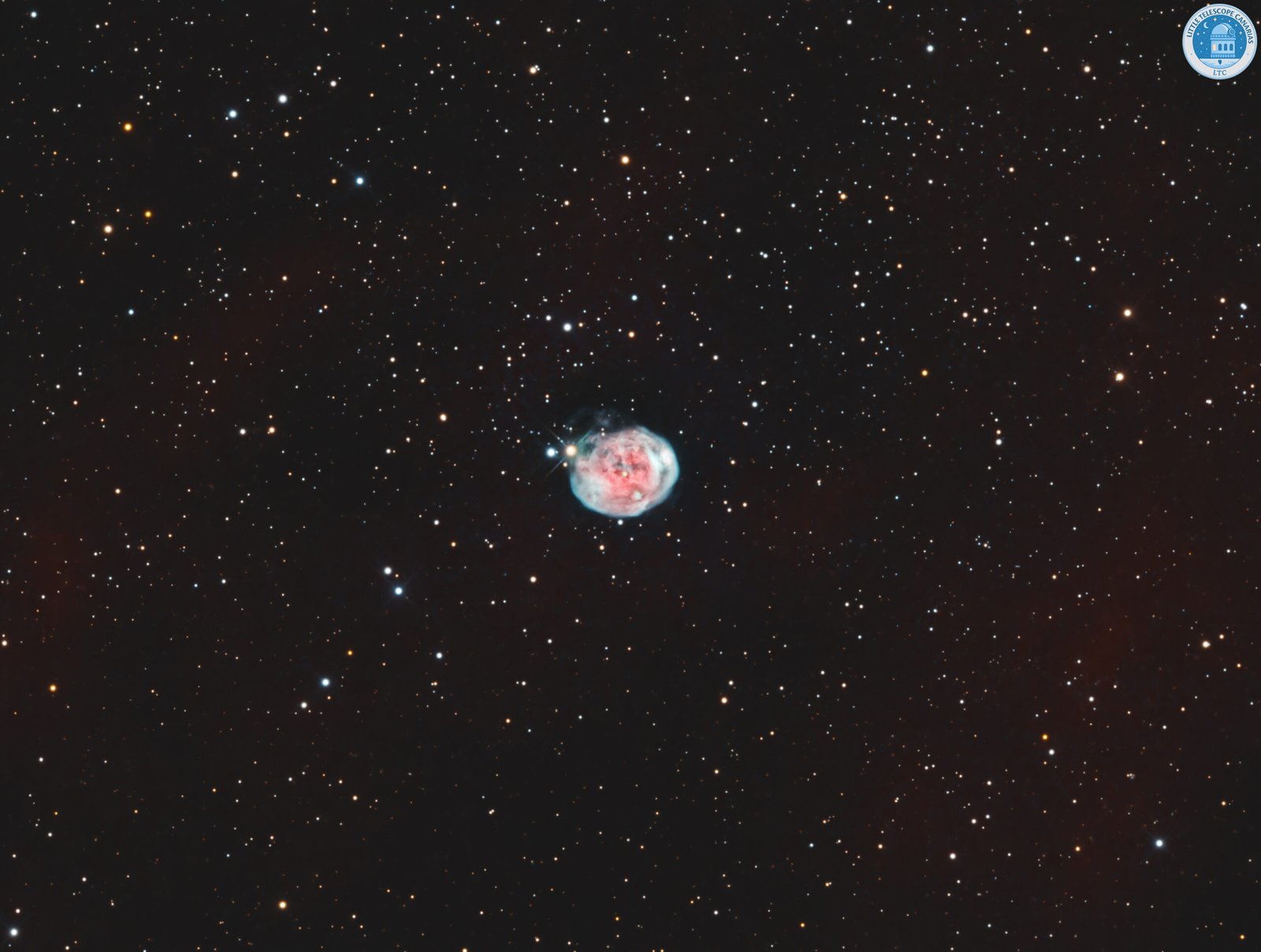
NGC 7008, known as the Fetus Nebula, is a planetary nebula located in the constellation of Cygnus, about 2,800 light-years from Earth. It was discovered by William Herschel in 1787 and stands out for its irregular and complex shape.
Its lack of symmetry makes it a particularly interesting object among planetary nebulae.
💥 The end of a star
NGC 7008 is the result of the evolution of a Sun-like star that, at the end of its life, expelled its outer layers into space, forming an expanding gaseous shell.
At its center remains a very hot white dwarf, whose ultraviolet radiation ionizes the surrounding gas, producing its characteristic bluish and greenish glow dominated by ionized oxygen.
📸 Images from LilTecan
The LilTecan team has captured this nebula, highlighting its filamentary structure, brightness variations, and the more diffuse regions surrounding the main body.
🌟 An irregular and dynamic structure
Modern studies have revealed key characteristics of this object:
- It exhibits a highly irregular morphology, with filaments and fragmented regions.
- Its angular size is about 60–80 arcseconds, corresponding to roughly 1 light-year.
- It shows low-ionization knots and regions, indicating dynamic mass ejection processes.
- The gas temperature is around 10,000–12,000 K.
- Its spectrum is dominated by emission lines such as [O III], Hα, and [N II].
- Its shape suggests interaction with the interstellar medium or the possible influence of a binary companion.
NGC 7008 —the Fetus Nebula— is a fascinating example of how planetary nebulae can develop complex and chaotic shapes. Its structure provides insights into the physical processes occurring at the end of stellar life.
Observing it today is like witnessing an evolving object, where material expelled by a star slowly disperses, contributing to the enrichment of the interstellar medium and the ongoing cycle of matter in the universe.