
NGC 7009 – The Saturn Nebula
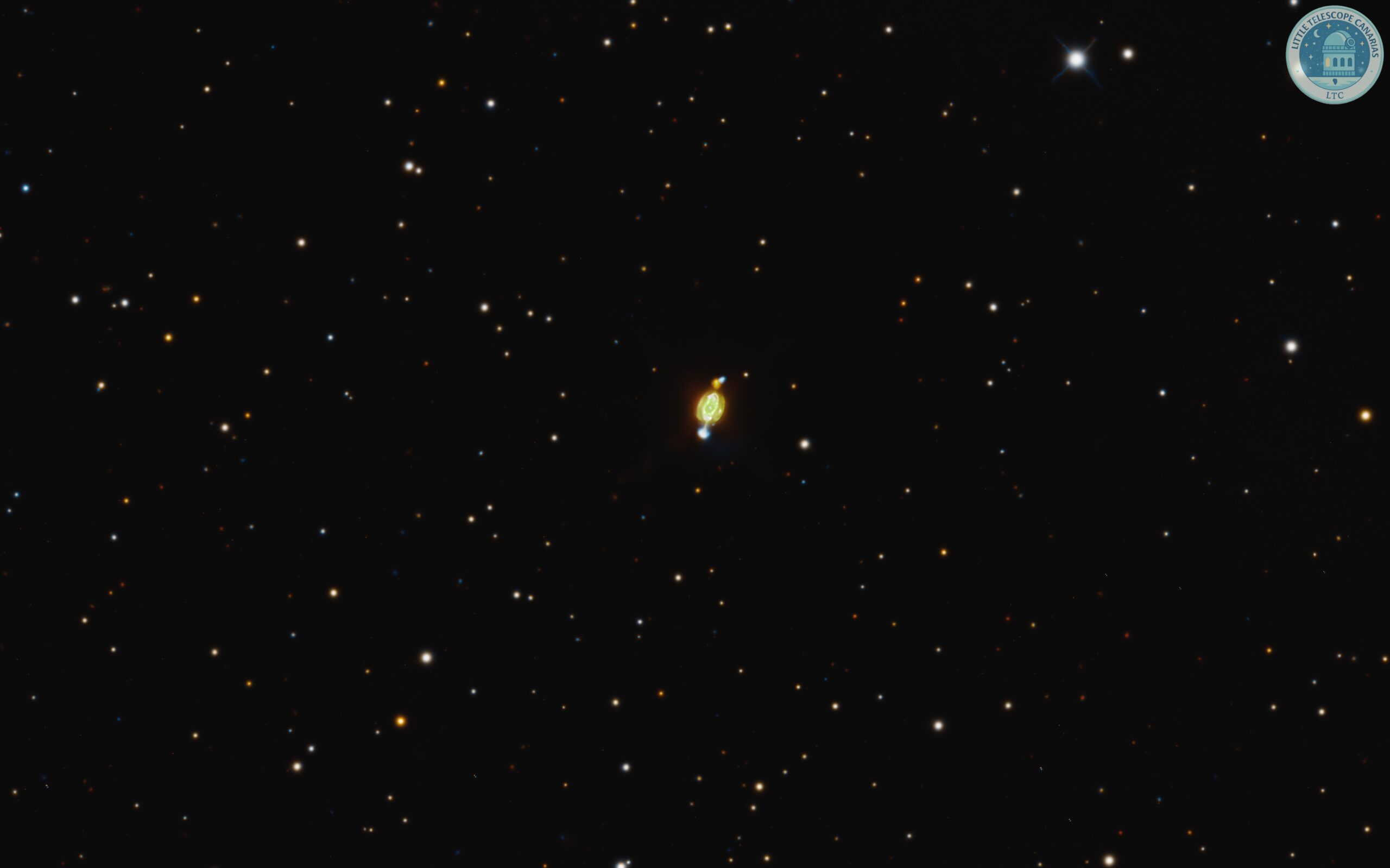
NGC 7009, known as the Saturn Nebula, is a bright planetary nebula located in the constellation of Aquarius, about 3,900 light-years from Earth. It was discovered by William Herschel in 1782 and gets its name from its visual resemblance to the planet Saturn, due to its lateral extensions.
Its high brightness and complex structure make it one of the most studied objects of its kind.
💥 The end of a star
NGC 7009 is the result of the evolution of a Sun-like star, which, after exhausting its fuel, expelled its outer layers to form an expanding gaseous shell.
At its center lies a very hot white dwarf, whose intense ultraviolet radiation ionizes the surrounding gas. This process produces its characteristic glow, dominated by ionized oxygen emissions that give it its bluish and greenish tones.
📸 Images from LilTecan
The LilTecan team has captured the Saturn Nebula using different filters, revealing its internal structure, outer shells, and fine details in its lateral extensions.
🌟 A complex and highly symmetrical structure
Modern studies have revealed a wealth of detail:
- It shows an elliptical structure with multiple layers, including a bright inner shell and more diffuse outer regions.
- Its distinctive “ansae” (lateral extensions) give it its characteristic appearance.
- Its angular size is about 25–30 arcseconds, corresponding to roughly 1 light-year.
- It contains jets and low-ionization knots, indicating dynamic mass ejection episodes.
- The gas temperature is around 10,000 K, with local variations.
- Its spectrum is dominated by [O III], Hα, and He II emission lines, indicating a high degree of ionization.
NGC 7009 —the Saturn Nebula— is an outstanding example of the structural complexity planetary nebulae can reach. Its symmetry and fine details make it an ideal laboratory for studying stellar evolution.
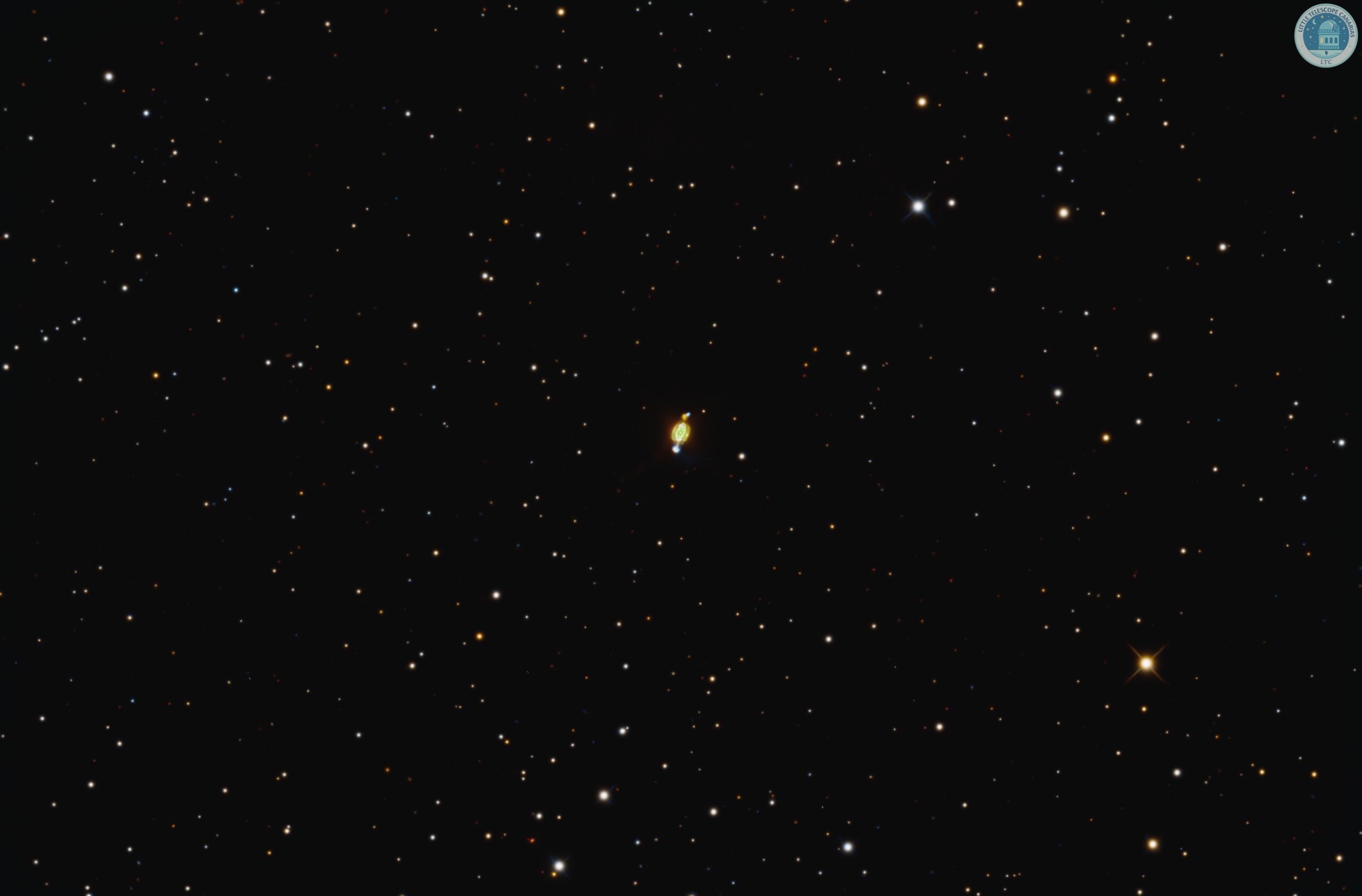
Observing it today is witnessing an advanced stage in the life of a Sun-like star, a process that transforms the interstellar environment and contributes to the ongoing cycle of matter in the universe.