
NGC 7080 – A Barred Spiral Galaxy with Intense Star Formation Activity
Located in the constellation of Vulpecula (the Fox), NGC 7080 is a barred spiral galaxy at an estimated distance of approximately 62.7 megaparsecs, or about 204 million light-years from Earth, according to a study investigating its structural properties and star formation activity.
NGC 7080 was discovered by the German astronomer Albert Marth in 1863. It is also listed in some catalogues under the designation NGC 7054, corresponding to an independent observation of the same object.
This galaxy is particularly interesting because of its barred structure and the intense star formation activity detected in its central region. Studies at different wavelengths have made it possible to analyse the distribution of stars, gas and dust, as well as the role played by the bar in the galaxy’s evolution.
🌌 A Barred Spiral Galaxy
NGC 7080 is classified as a SB(r)b barred spiral galaxy. This classification indicates that it has a stellar bar crossing its central region, together with a ring-like structure associated with the distribution of its spiral arms.
Galactic bars are important structures in the evolution of galaxies. Their gravitational influence can modify the distribution of gas in the disk and encourage its movement towards the inner regions.
In NGC 7080, the bar is clearly visible in optical and infrared images, although it is less prominent than those observed in other barred galaxies studied in the same scientific research.
The galaxy is viewed at a relatively face-on orientation, making it easier to study the distribution of its main components.
📸 Images from LilTecan
NGC 7080 is an interesting target for galaxy astrophotography, although its distance and relatively small angular size make an appropriate focal length and deep exposures necessary to reveal its details.
Its barred spiral structure, central bulge and star-forming regions offer different features that can be investigated using broadband imaging and observations at specific wavelengths.
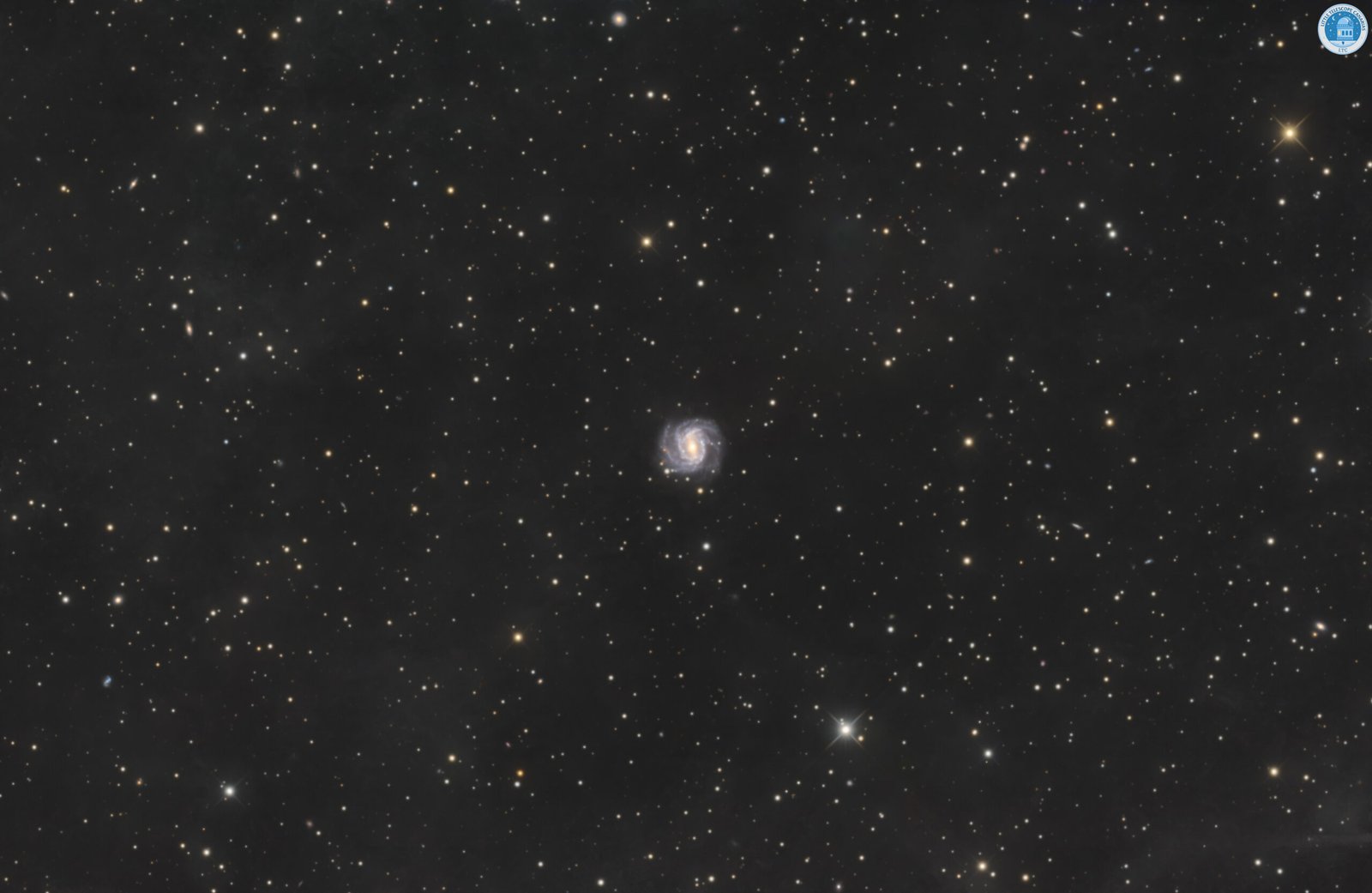
LRGB images allow us to represent the overall distribution of stellar light and highlight the galaxy’s structure. The Hα filter, on the other hand, can help reveal star-forming regions associated with ionized hydrogen.
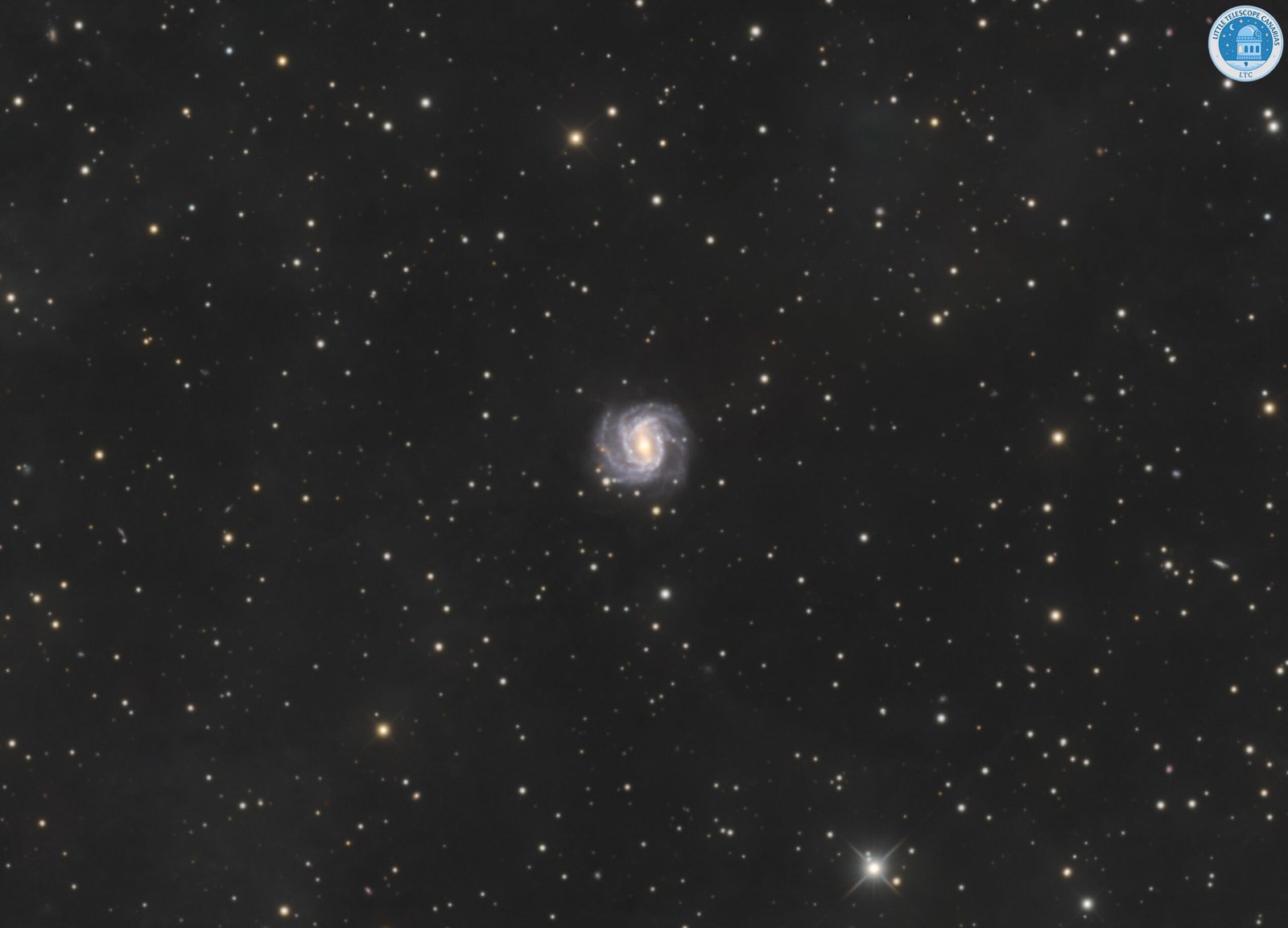
From LilTecan, beneath the skies of La Palma, a long integration allows us to work on this relatively faint galaxy and explore the details of its structure.
🌟 Main Structure and Characteristics
NGC 7080 has several interesting characteristics:
- Object type: SB(r)b barred spiral galaxy located in the constellation of Vulpecula.
- Distance: Approximately 204 million light-years, according to the 2012 study by Zhou and collaborators.
- Structure: It features a central bulge, a spiral disk and a stellar bar.
- Star formation: Activity is concentrated mainly in the central region and along the spiral arms.
⭐ Intense Star Formation Activity
One of the most remarkable features of NGC 7080 is the star formation activity concentrated in its central region.
The study published by Zhou, Cao and Wu in 2012 analysed the galaxy using optical and infrared observations. The researchers used Hα images to identify star-forming regions and found that activity is concentrated mainly in the bulge and along the spiral arms.
In this study, 20 star-forming regions were identified through the analysis of Hα and mid-infrared images.
The results showed that the star formation rate surface density in the central region is considerably higher than that detected in the bar and disk. In fact, star formation activity in the bar of NGC 7080 is relatively weak compared with that observed in other barred galaxies.
These findings make it possible to investigate how a galaxy’s internal structure can influence the distribution of regions where new stars are born.
🔭 The Role of the Galactic Bar
Stellar bars can play an important role in the evolution of spiral galaxies. Their gravitational field can redistribute material within the disk and promote the transport of gas towards the central regions.
This process can increase the availability of gas around the bulge and encourage episodes of star formation.
In the case of NGC 7080, image decomposition studies identified three main components: bulge, disk and bar. The authors classified the bulge as a pseudobulge, a central structure with characteristics associated with the secular evolution of the galactic disk.
The research also found that star formation in NGC 7080 is concentrated mainly in the bulge and spiral arms, while no comparable activity was detected in the bar.
This behaviour demonstrates that the presence of a bar does not necessarily mean that star formation is intense throughout its entire length.
🌌 NGC 7080 from La Palma
NGC 7080 is an interesting example of how a galaxy’s structure can influence its evolution. The presence of a bar, a central bulge and star-forming regions allows us to study the processes that redistribute gas and material within galactic disks.
Observations at different wavelengths are essential to understanding these processes. While visible and infrared light allow us to study the distribution of stars and dust, Hα emission helps identify regions where new stars are forming.
From La Palma, NGC 7080 is a suitable target for photographing faint galaxies and exploring the structures that characterise barred spirals.
At LilTecan, photographing objects such as NGC 7080 allows us to explore the diversity of galaxies and better understand the processes involved in their evolution over millions of years.